
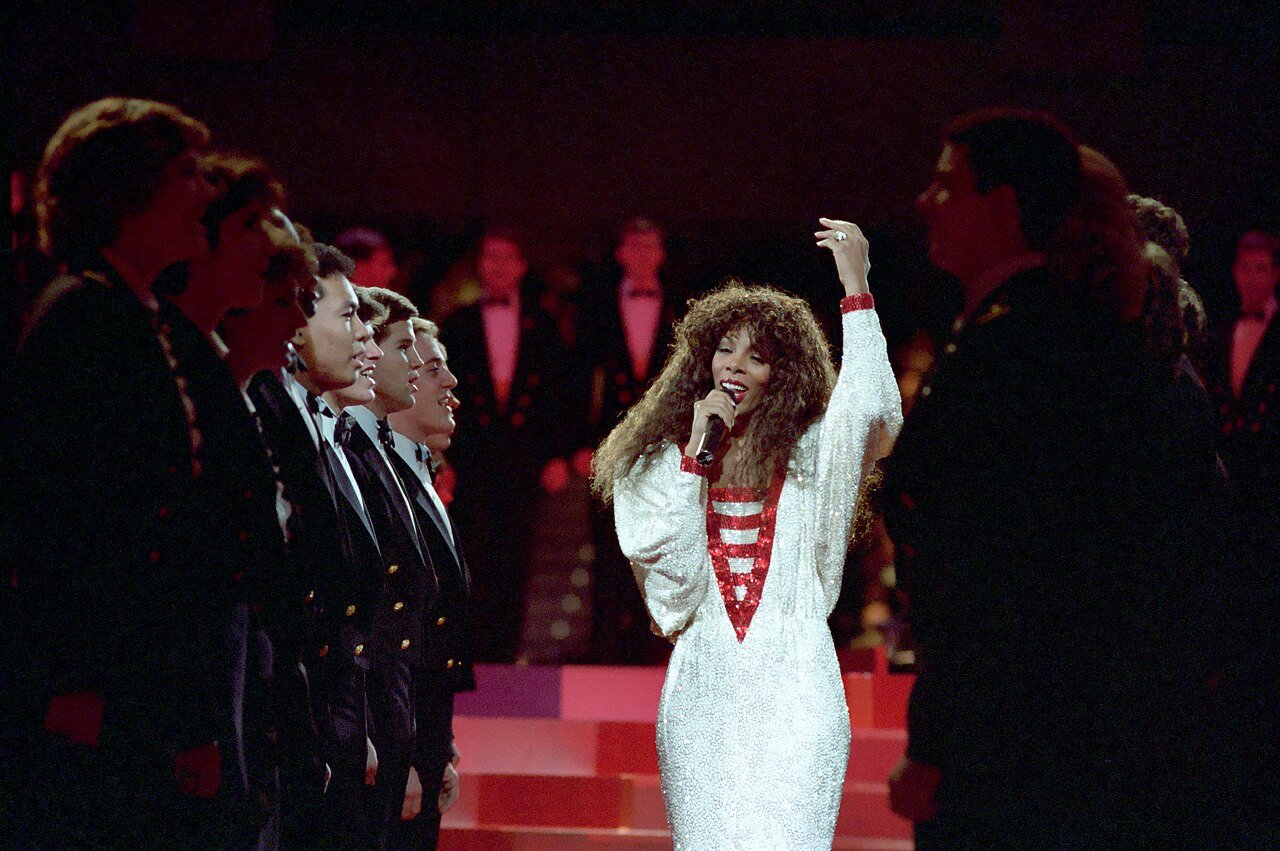
Donna Summer’s “I Feel Love” was built almost entirely on a synthesizer, not an orchestra. Giorgio Moroder and Pete Bellotte produced and co-wrote the track with Summer for her 1977 album I Remember Yesterday, aiming for a sound that belonged to no decade yet.
The single first charted in the UK on 9 July 1977 and spent four weeks at No. 1, according to the Official Charts Company. In the US it peaked at No. 6 on the Billboard Hot 100 that November.
A borrowed Moog and an engineer named Wedel
Moroder and Bellotte wanted each track on I Remember Yesterday to evoke a different decade, from 40s swing to 70s funk. For the futuristic closer, they called on Robby Wedel, an engineer who operated a Moog modular synthesizer owned by the classical composer Eberhard Schoener.
Bellotte later described Wedel turning up with “three big units, roughly two and a half feet by two feet, full of oscillators and voltage controls, the wires hanging out like one of the old telephone exchanges,” plus a fourth box: an arpeggiator and trigger, he told Pitchfork in 2017.
Nobody had asked Wedel to invent anything, but he quietly had. He put a reference pulse on the sixteenth track of the sixteen-track tape, so every new layer the band added locked automatically to the same tempo as the first.
“It wasn’t something the machine’s inventor, Bob Moog, knew about,” Bellotte said years later. “It was through Robbie that we managed to get the track.”
The Moog itself was temperamental. It drifted out of tune every few minutes, turning the session into what one essay for the Library of Congress’s National Recording Registry called “an arduous task of stop-and-go.”
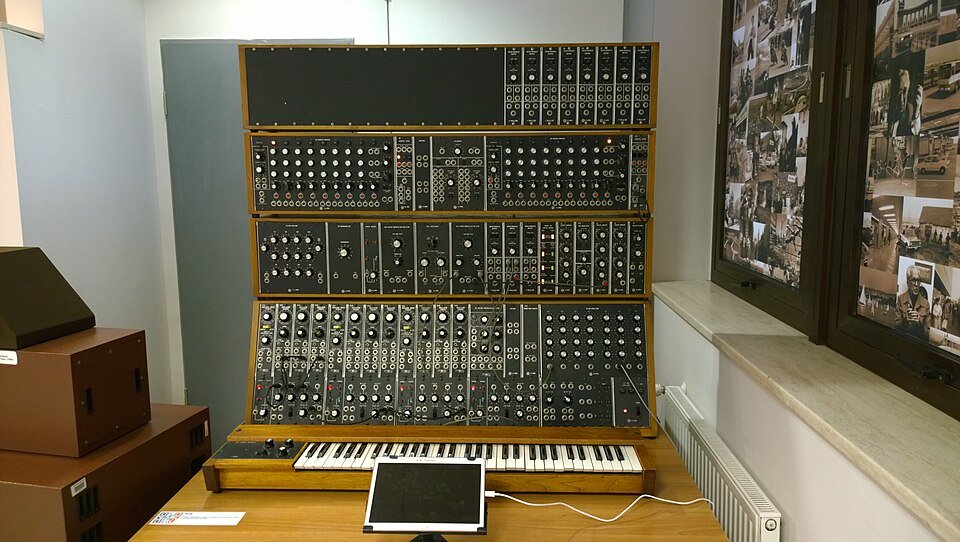
Even the hi-hat came from the Moog: white noise shaped by an envelope, Moroder has said. The one sound the synthesizer could not manage was a convincing kick drum, so drummer Keith Forsey played it on a real kit, sometimes for fifteen minutes at a stretch, muffling his own hi-hat with a phone book so he could keep time without being heard.
Forsey’s kick and Summer’s vocal were the only sounds on the record not generated by a machine.
“The sound of the future”
Word reached Berlin within weeks. David Bowie later recalled that Brian Eno, his collaborator on the records now known as the Berlin Trilogy, “came running in” one day with news.
“I have heard the sound of the future,” Eno told him, Bowie recounted to Rolling Stone in 2012. Eno put on “I Feel Love” and said, “This single is going to change the sound of club music for the next fifteen years.” “Which was more or less right,” Bowie added.
From a B-side to a genre
“I Feel Love” was not meant to lead. It first appeared as the B-side to “Can’t We Just Sit Down (And Talk It Over),” before Casablanca swapped the two sides two months later.
In the UK it was released on the GTO label, catalogue number GT100, and spent eleven weeks inside the Top 40, the Official Charts Company’s data shows.
In 2011 the recording entered the US Library of Congress’s National Recording Registry, the federal list of works judged worth preserving as “culturally, historically, or aesthetically important.”
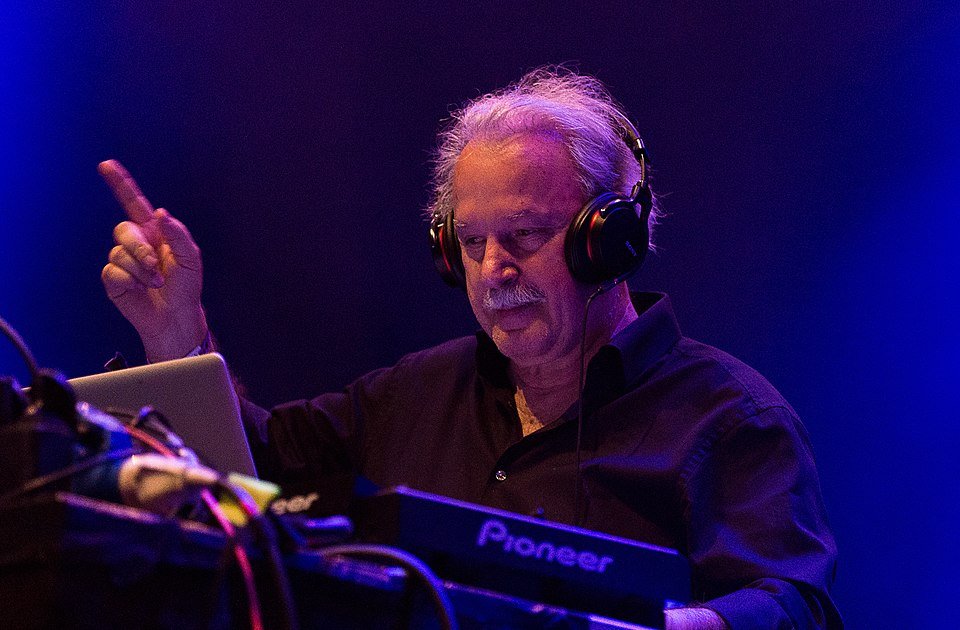
Moroder went on to become one of disco’s most in-demand producers; we traced his later work scoring the video game Tron RUN/r, and more on the era’s hardware is in our Synth Gear & Tech section.
The all-machine blueprint Wedel helped build became a toolkit producers reused through the next decade, from the Roland TR-808 drum machine to the Yamaha DX7.
In 2022, Beyonce sampled “I Feel Love” on “Summer Renaissance,” from the album Renaissance, forty-five years after Wedel’s click track first locked the song into time.
Lead photo: White House Photographic Office / Wikimedia Commons, public domain (US government work)