
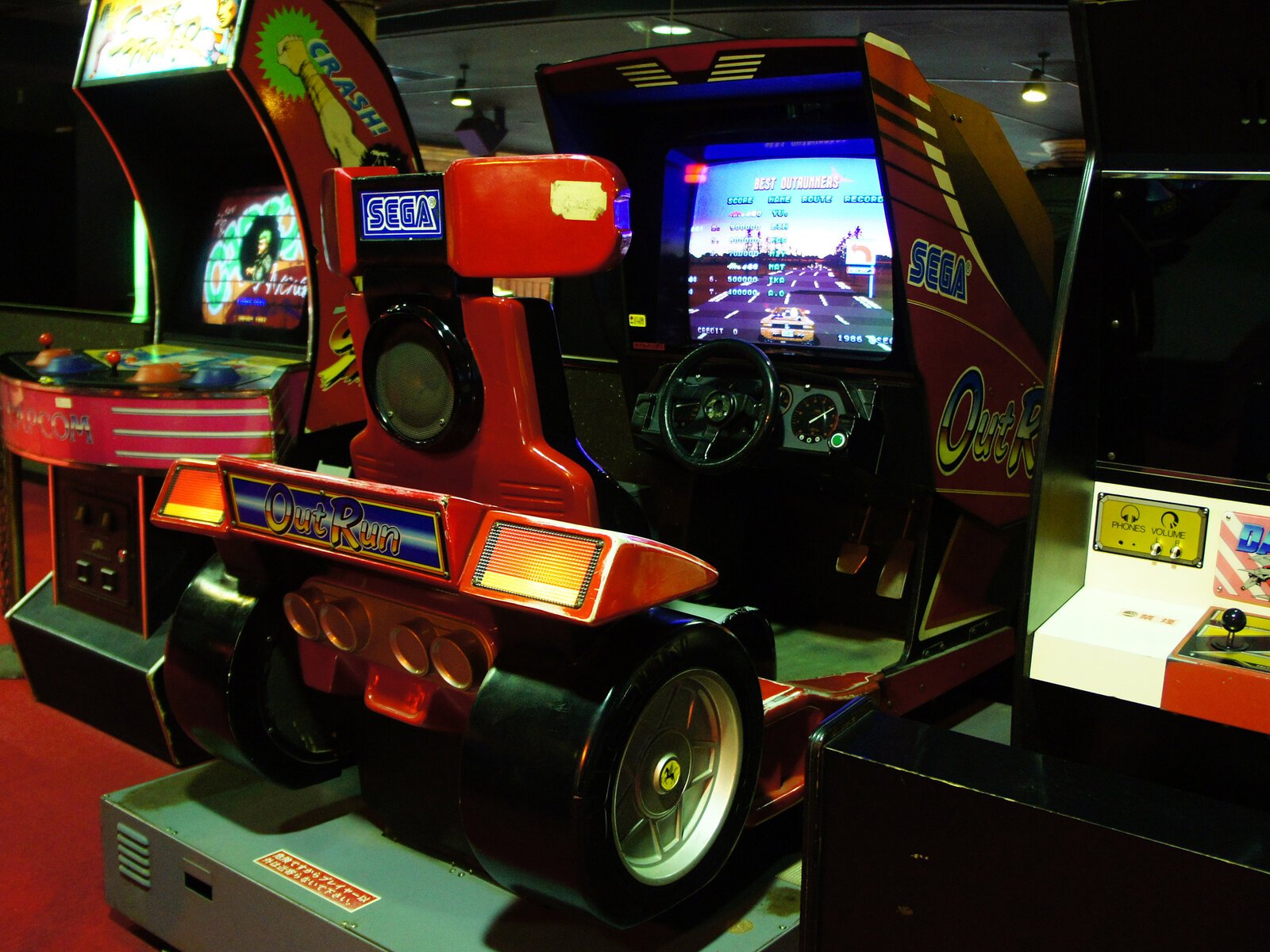
Sega released Out Run in arcades in September 1986, a racing game designed by Yu Suzuki with music by Hiroshi Kawaguchi. Players picked the song from a car radio built into the dashboard, a first for a video game.
The radio offered three tracks: “Passing Breeze,” “Splash Wave” and “Magical Sound Shower.” A fourth, “Last Wave,” played only on the end-of-game score screen.
A dashboard built around a choice of music
Kawaguchi had scored Suzuki’s earlier Hang-On and went on to After Burner. For Out Run he leaned toward a Latin and Caribbean feel, and has named Latin jazz musician Naoya Matsuoka as his main influence on the score.
Some of the original audio samples turned up corrupted years later, traced to a failed master ROM chip. Sega did not notice until preparing a 20th-anniversary soundtrack box set, and recovered the correct files from an 8-inch floppy disk.
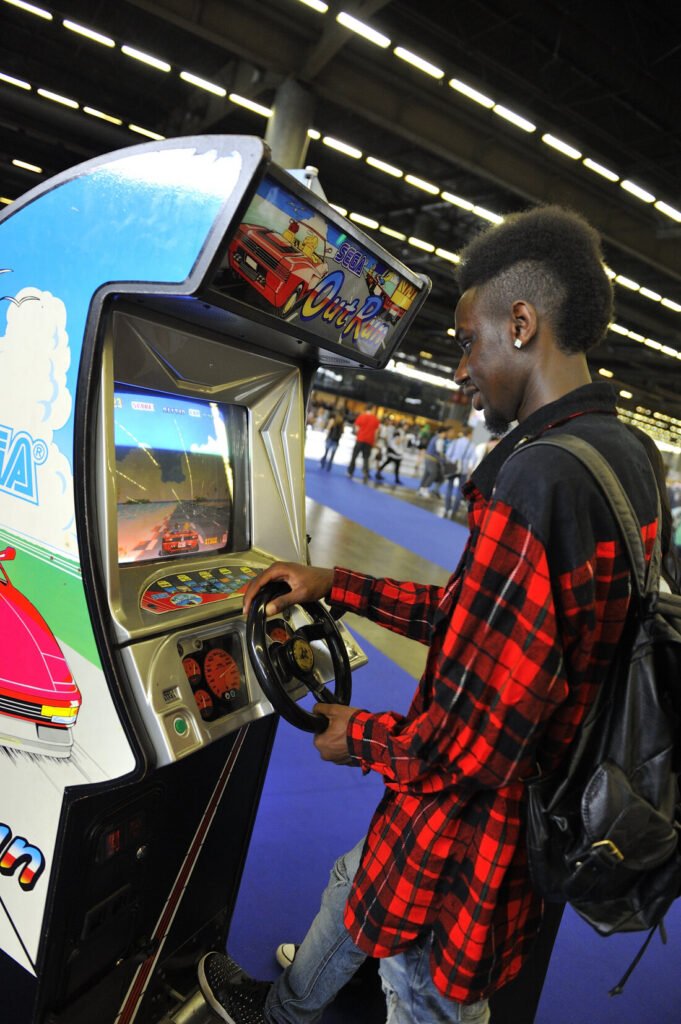
The cabinet mattered as much as the songs. Two of Out Run’s four cabinet designs were sit-down motion simulators shaped like the in-game car, seven feet long and 770 pounds, with a hydraulic seat that shook on crashes and stereo speakers mounted behind the driver’s head.
Out Run topped Japan’s arcade charts in November and December 1986, then became the highest-grossing arcade game of 1987 in both the US and Japan. Sega had sold 18,000 cabinets worldwide by early 1987, split roughly 3,500 in Japan, 8,000 in the US and 6,500 across Europe and Southeast Asia.
By 1994 that total reached 30,000 cabinets, and Sega’s take from arcade machine sales passed $100 million.
Sega never licensed the Ferrari
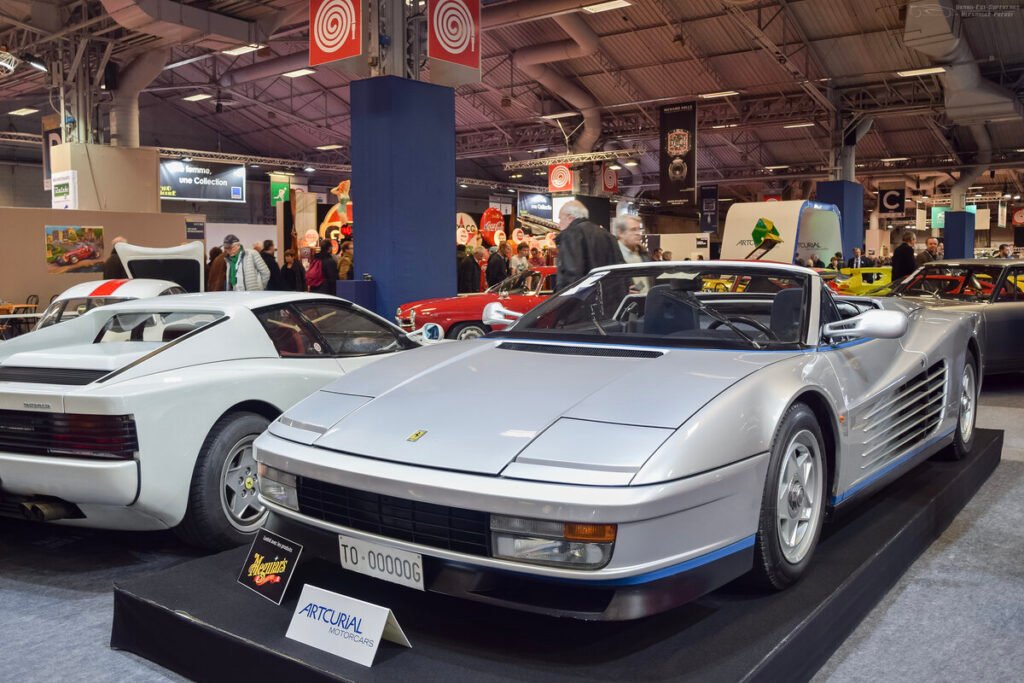
The player’s car was a Ferrari Testarossa convertible, picked after Suzuki spent two weeks touring Europe in a rented BMW 520i, scouting Frankfurt, Monaco, Rome, the Swiss Alps and the French Riviera for the game’s five routes.
“A Ferrari was going to be too expensive and a Porsche wouldn’t hold all the luggage, so we went with a BMW,” Suzuki told Wired UK in 2021. He spotted the Testarossa in Monaco and had his team photograph and record one back in Japan.
Sega never licensed the Ferrari brand for the game. It paid a settlement fee after Ferrari complained, and only secured an official license for later OutRun sequels.
“Unlike rigid racing games, I was able to create a new genre of driving game where you would drive one-handed with a beautiful girl by your side, listening to the car stereo while leaving the competition in the dust,” Suzuki said.
Out Run also won the 1987 Golden Joystick Award for Game of the Year and Arcade Game of the Year, and IGN ranked it the fourth-most influential racing game of all time in 2015.
The soundtrack gave a music genre its name
Out Run’s three main tracks were remixed and covered for decades, and the retro electronic style built around that sound took the game’s name. MTV writer Molly Lambert described the genre in 2016 as “synthwave, or ‘outrun,’ after the 1986 driving arcade game that let players select a soundtrack.”
French producer Kavinsky named his 2013 debut album OutRun, released on Record Makers, Vertigo and Mercury. Track eight, “Nightcall,” features Lovefoxxx and plays over the opening credits of the 2011 film Drive, a connection explored in our Kavinsky gear profile.
“Yes! It’s a game I used to play a lot,” Kavinsky told Spin in February 2013, asked if the album title referenced the arcade game. “It’s from a very talented game creator, Yu Suzuki, who is the guy who also did Hang-On, Shenmue, so many.”
Kavinsky, who has called the Testarossa “a nightmare to drive” despite his fondness for it, built the album’s backstory around a driver who crashes his car in 1986 and returns as a synth-playing phantom two decades later, a plot we trace further in our video game breakdown.
Producers chasing that sound today still reach for the term, as in our own guide to building outrun beats on modern hardware.
Forty years after its arcade debut, the radio feature Suzuki built for a three-button dashboard turned up again in the Grand Theft Auto series’ in-car stations, carrying Out Run’s choice of music into games it never set out to influence.
Lead photo: 空練 / Wikimedia Commons, CC BY-SA 3.0