
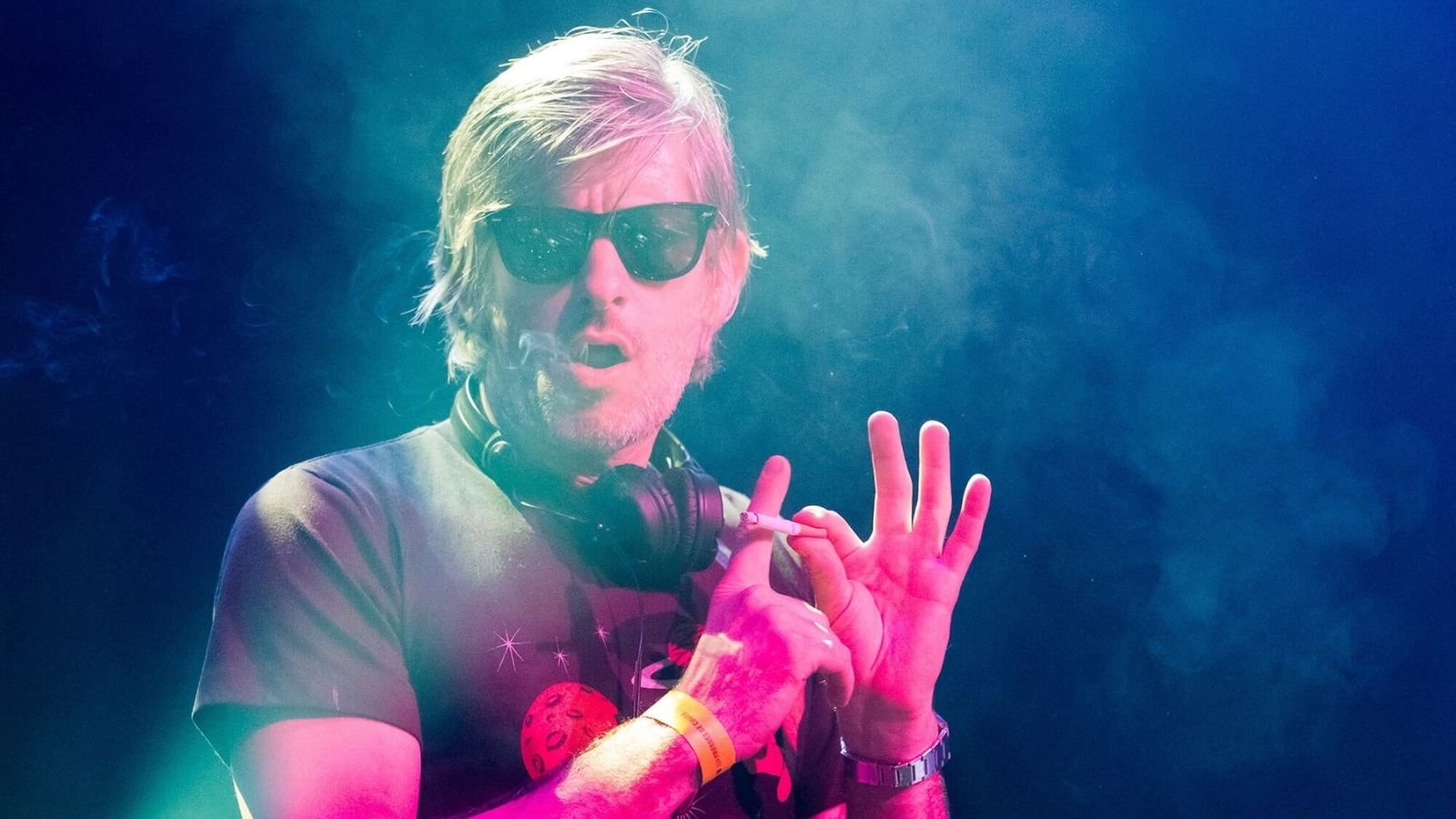
Following our recent tribute to the late Vincent Belorgey and our breakdown of his video game legacy, it is time to pop the hood and examine the musical engine behind the artist. Vincent Belorgey (1975–2026), known worldwide as Kavinsky, single-handedly defined the modern synthwave genre.
While the visual identity of the scene was cemented by neon grids and wedge-shaped retro supercars, its sonic heartbeat was forged through a very specific arsenal of vintage synthesizers. Interestingly, his approach to gear evolved dramatically. His groundbreaking 2013 debut album, OutRun, was produced almost entirely “in the box” using software plugins. However, for his critically acclaimed 2022 album, Reborn, he shifted gears, locking himself in a studio to record with authentic, physical analog hardware.
Whether you are looking for production inspiration for your own upcoming August releases or want to geek out on classic gear, here is a breakdown of the iconic synthesizers and drum machines that built Kavinsky’s signature sound.
The Outrun Hardware Toolkit
| Hardware / Synth | Primary Role | Signature Aesthetic Feature |
| Yamaha DX7 | Leads & Plucks | Cold, glassy 1980s FM synthesis |
| Roland Juno-106 | Basslines & Chords | Lush analog chorus and sweeping pads |
| Oberheim OB-X | Cinematic Soundscapes | Massive, thick analog brass and strings |
| Roland TR-808 | Percussion | The undisputed king of analog drum hits |
| Macintosh G4 (Logic) | Sequencing | Kavinsky’s very first digital brain |
1. The Yamaha DX7 (The Digital Pioneer)
If you want to understand the rigid, robotic, and metallic tones of the mid-1980s, you have to look at the Yamaha DX7. Widely documented as one of the best-selling synthesizers of all time, the DX7 utilizes Frequency Modulation (FM) synthesis.
Kavinsky famously noted that his very first EP, Teddy Boy (2006), was written and recorded almost exclusively using the Yamaha DX7. The bell-like plucks and aggressive, synthetic bass patches gave his early tracks a gritty, lo-fi authenticity that helped lay the foundation for modern darksynth pioneers like Lazerhawk.
2. Roland Juno-106 (The Analog Warmth)
When crafting the driving, pulsating basslines that synthwave is known for, the Roland Juno series remains unmatched. To achieve the legendary retro-cinematic width on tracks like “Nightcall,” producers inevitably turn to the Roland Juno-106 (or its predecessor, the Juno-60).
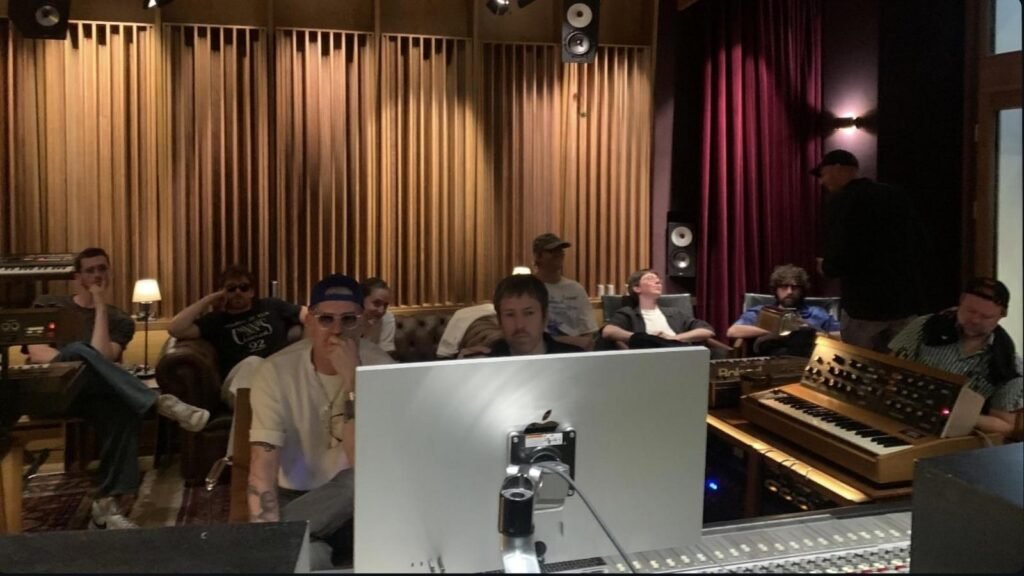
The secret weapon of the Juno is its onboard analog chorus effect, which instantly transforms simple, single-oscillator basslines into massive, swirling neon anthems. During the studio sessions for Reborn, Kavinsky leaned heavily into Roland hardware to capture that warm, drifting analog instability.
3. Oberheim OB-X (The Cinematic Scale)
While the Juno provides the groove, the Oberheim OB-X provides the drama. To achieve a stadium-sized, theatrical sound, Kavinsky incorporated the OB-X into his later studio sessions.
Famous for its fat analog oscillators and thick, brassy synth pads, the OB-X is what provides the sweeping, dystopian soundscapes that make Kavinsky’s music feel like the soundtrack to a lost 1980s sci-fi film. It is the audio equivalent of staring at a striking cyberpunk art piece.
4. The TR-808 & The Macintosh (The Engine)
Before he became a global sensation, Belorgey started his musical journey with a Roland TR-808 drum machine and a simple melodica. As verified by his Equipboard gear profile, the 808 provided the punchy, analog kicks and snappy snares that defined the French Touch era.
However, the real catalyst for his electronic production was an old Apple Macintosh computer running Emagic Logic 5 (the precursor to Apple’s Logic Pro). The computer was gifted to him around 2003 by his close friend, filmmaker and musician Quentin Dupieux (Mr. Oizo), after it was nearly thrown in the trash.
“Mr. Oizo gave me a computer that was on its way to the trash. I said, ‘Okay, give it to me, maybe I can do something with it.’ Inside was the software Logic, and I just tried to make music with it.” — Kavinsky
Kavinsky Release Timeline
| Year | Release Name | Type | Notes |
| 2006 | Teddy Boy | EP | Kavinsky’s debut release on the Paris label Record Makers, heavily inspired by his youth and arcade machines. |
| 2007 | 1986 | EP | Featured the acclaimed “Testarossa Autodrive” remix by SebastiAn, later licensed to major video games like Grand Theft Auto IV. |
| 2008 | Blazer | EP | Released under Fool’s Gold Records. |
| 2010 | “Nightcall” | Single / EP | The seminal track that catalyzed the mainstream explosion of the synthwave genre. |
| 2012 | “Roadgame” | Single | A major follow-up single that set the stage for his debut studio album. |
| 2013 | OutRun | Studio Album | His debut full-length studio album, named after the 1986 SEGA arcade game. |
| 2013 | ProtoVision & Odd Look | EPs | Promotional EPs released alongside the OutRun album cycle. |
| 2021 | “Renegade” | Single | Marked his highly anticipated return to music after a seven-year hiatus. |
| 2022 | Reborn | Studio Album | His sophomore studio album, featuring tracks like “Zenith” and “Cameo,” which marked an evolutionary shift toward smoother, richer, hardware-driven production. |
The Legacy and Architecture of “Nightcall”
Released in 2010, “Nightcall” stands as the undisputed anthem of the synthwave movement, cementing Kavinsky’s status as the godfather of modern retro-futurism. The track boasts an elite production pedigree, having been co-produced by Daft Punk’s Guy-Manuel de Homem-Christo and mixed by French electro heavyweight SebastiAn.
Sonically, “Nightcall” juxtaposes Kavinsky’s heavily vocoded, robotic voice with ethereal chorus vocals provided by Lovefoxxx of the Brazilian band CSS, creating an electrifying and melancholic atmosphere. The composition is driven by a distinct 8-note arpeggiated synth pattern outlining an urgent G/B slash chord, layered over deep, resonant analog sweeps.
The song’s cultural legacy was permanently etched into cinema history when director Nicolas Winding Refn selected it for the iconic opening credits of his 2011 neo-noir film Drive, amplifying its cult status and bringing the 1980s synth aesthetic to a mainstream audience.
Underscoring its timeless global impact, “Nightcall” was performed live to a worldwide audience at the closing ceremony of the 2024 Paris Summer Olympics alongside French band Phoenix and Belgian singer Angèle. This performance caused the 14-year-old track to shatter global music tracking records, earning the title for the most Shazamed song in a single day and the most Shazams within a single minute.
Frequently Asked Questions (FAQ)
What synthesizer was used on Kavinsky’s “Nightcall”?
“Nightcall” features heavily processed, analog-style synth layers. While the track was co-produced with Guy-Manuel de Homem-Christo of Daft Punk, recreations of the track often utilize the Roland Juno-60 or Juno-106 for the arpeggiated basslines and warm synth chords.
Did Kavinsky use physical hardware or software plugins?
He used both. His debut album OutRun (2013) was created almost entirely “in the box” with software plugins and VSTs. However, his 2022 follow-up album, Reborn, marked a deliberate shift back to physical hardware synthesizers and live instruments.