
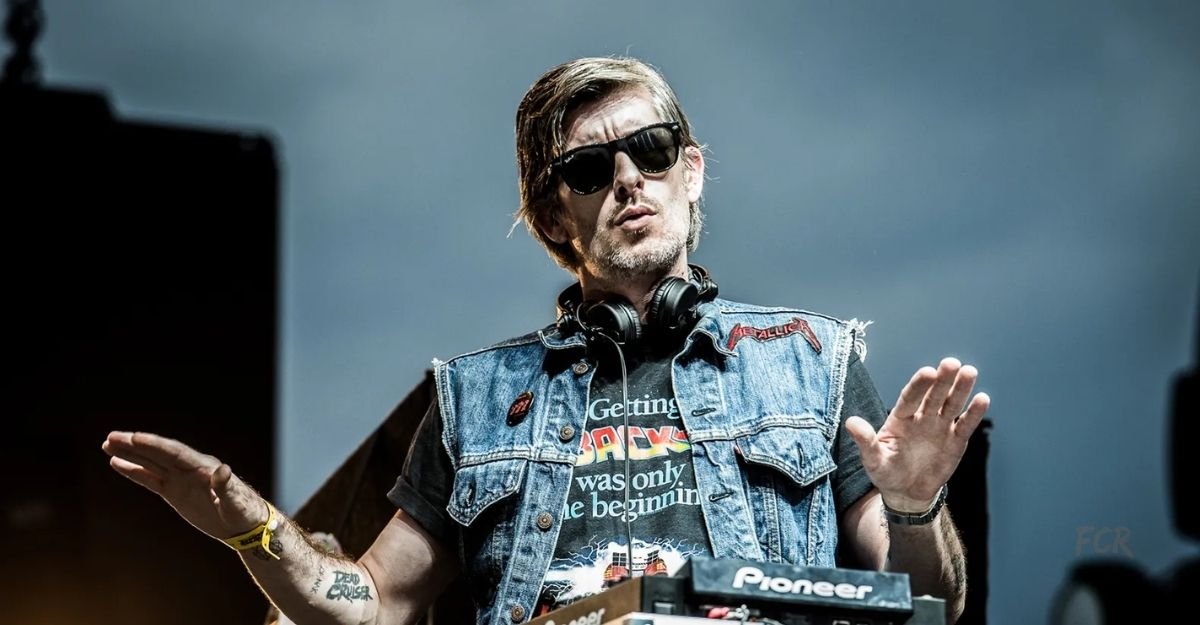
Editorial Notice: This page represents the official 2026 historical archive and breaking news coverage under Editor-in-Chief Sahil Chopra. As Future City Records continues our mission to preserve the cultural history of retro-electronic music, it is with profound sadness that we report on the passing of one of the genre’s founding architects.
I know that when a true legend goes, the world aches with their absence. But deep down, we all know we lost a towering pioneer today. I was actually planning an Instagram post to wish him a happy birthday later this week, but who could have possibly known that instead of celebrating his life, I would be sitting here writing his tribute? You will be missed, King of Synthwave. The global electronic music community is reeling from a massive loss.
Vincent Pierre Claude Belorgey, the French DJ, producer, and actor universally known by his iconic stage persona Kavinsky, was found dead at his home in Paris on Tuesday evening, July 28, 2026. He was 50 years old, passing away a mere three days before what would have been his 51st birthday on July 31.
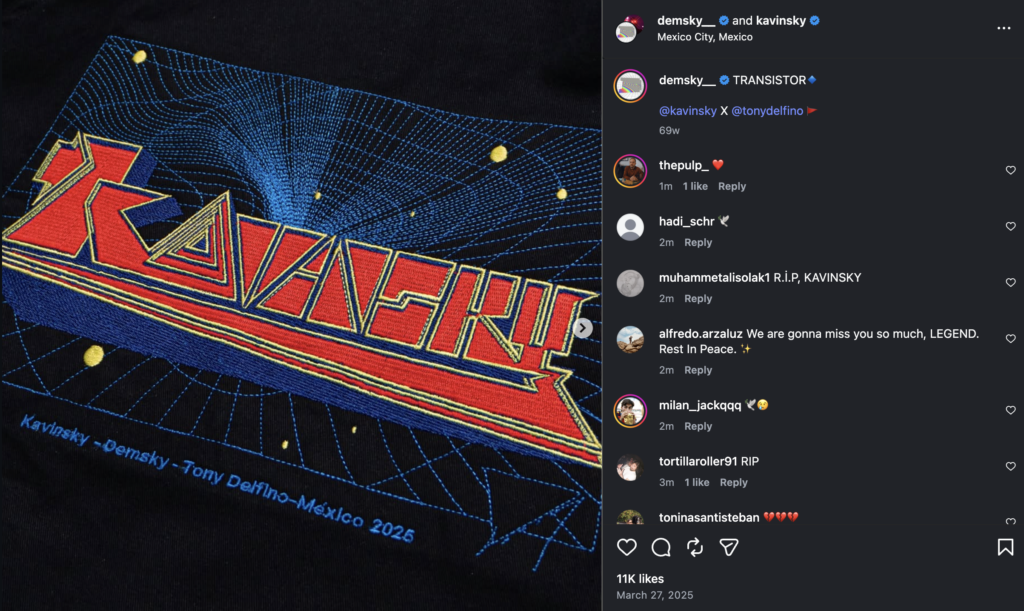
The Paris prosecutor’s office confirmed that an official inquiry into the circumstances of his death has been opened. However, first responders reported finding no suspicious elements at the scene, and authorities currently do not suspect foul play. Multiple French media outlets have indicated that Belorgey had been suffering from severe headaches in the days preceding his death, leading to suspicions of a fatal stroke.
As global fans search for answers with terms like “Kavinsky mort” and “Kavinsky deces” trending worldwide, we look back at the man who resurrected a fictional 1980s zombie and, in doing so, breathed life into the entire modern synthwave movement.
A Personal Reflection: How Kavinsky Changed My Night Drives Forever
For me, Kavinsky’s music wasn’t just something I listened to on headphones; it was the soundtrack to my youth. Back when my friends and I were constantly on the road, I was always the designated “drive DJ.” Whenever I took the wheel on late-night highway runs, I made it my personal mission to curate the atmosphere.
I distinctly remember the exact night I introduced Kavinsky to my friends. We were cruising down an open stretch of road, the streetlights rhythmically sweeping across the windshield, when I queued up “Nightcall.” The moment those heavy, analog synth pulses and vocoded vocals reverberated through the car speakers, the entire mood shifted. Nobody spoke.
My friends were instantly hooked, asking me who made the track and demanding I play it again. From that midnight drive onward, Kavinsky became our non-negotiable soundtrack. Knowing he is gone makes those memories hit exponentially harder.
The Accidental Producer: A Masterclass in VSTs and Hardware
Vincent Belorgey’s path to musical immortality began entirely by chance. Originally an actor who appeared in films like Quentin Dupieux’s 2007 comedy Steak, Belorgey transitioned to music around 2005. Friends in the French “French Touch” electronic scene—including Dupieux (Mr. Oizo) and Jackson Fourgeaud—gifted him a computer and pointed him toward an early synthesizer.
While many assume his massive, cinematic sound required a room full of expensive vintage gear, much of the early Kavinsky aesthetic was actually built using a single Yamaha DX7. He combined this iconic FM synthesizer with a deep love for 1980s film scores, crafting heavy, driving beats that felt both danceable and menacing.
When I first heard his early EPs, Teddy Boy (2006) and 1986 (2007), it was clear he was doing something different. The tracks didn’t just sound like homages to the past; they felt like lost artifacts from a dystopian future.
The Myth of the Testarossa: Discography and Lore
Belorgey didn’t just write songs; he built an entire universe. “Kavinsky is a character I created, because just putting my face on a record sleeve is not something that suits me,” he once explained.
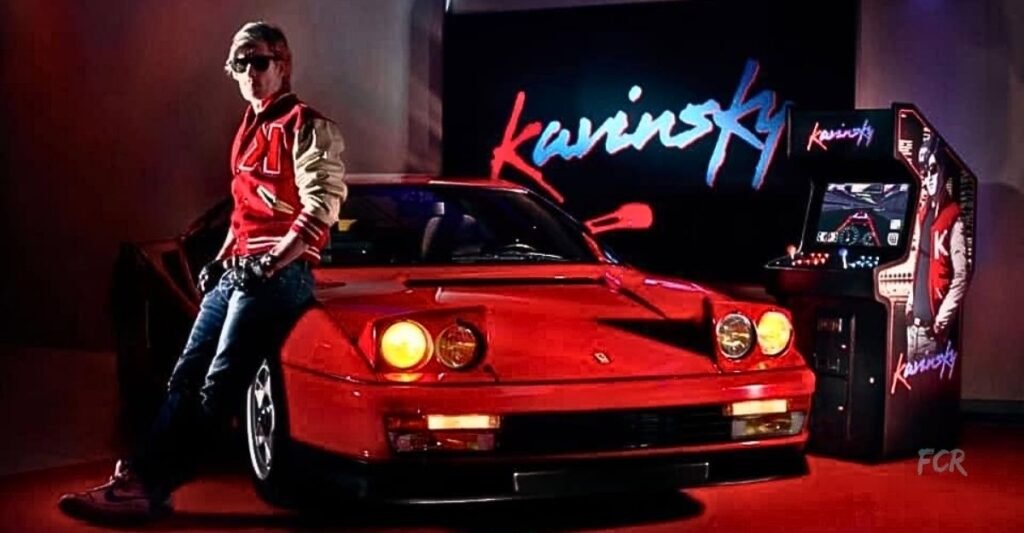
The lore was highly cinematic: a young man crashes his beloved Ferrari Testarossa in 1986 and rises from the grave decades later as a zombie to produce electronic music. This B-movie narrative gave his debut album its title, OutRun, and established the visual vocabulary—glowing red eyes, letterman jackets, and neon grids—that the entire synthwave genre still uses today.
Long before synthwave became a global phenomenon, Future City Records was dedicated to documenting the architects of the outrun sound. In November 2014, we officially archived Kavinsky’s foundational track “1986” on our own YouTube channel to preserve the raw, early FM-synthesis sound of his zombie-synth lore. You can listen to our original broadcast of the track below:
Kavinsky Official Discography Timeline
| Release Year | Title | Format | Core Tracks & Milestones |
| 2006 | Teddy Boy | EP | “Testarossa Autodrive” establishes his signature automotive synth sound. |
| 2007 | 1986 | EP | Expands the lore of the zombie producer; tours with Daft Punk and Justice. |
| 2010 | Nightcall | EP | The title track, co-produced by Guy-Manuel de Homem-Christo, becomes a global phenomenon. |
| 2013 | OutRun | Studio Album | A massive commercial success that cemented the “Outrun” synthwave aesthetic. |
| 2022 | Reborn | Studio Album | Returns from a long hiatus with a mature, polished sequel to his debut. |
The Track That Changed Everything: “Nightcall”
It is impossible to overstate the impact of “Nightcall.” Released in 2010, the track featured production assistance from Daft Punk’s Guy-Manuel de Homem-Christo and answering vocals from Lovefoxxx (of CSS).
However, it was the song’s placement in Nicolas Winding Refn’s 2011 neo-noir thriller Drive that changed everything. Playing over the opening credits as Ryan Gosling’s getaway driver cruised through a neon-lit Los Angeles, “Nightcall” instantly took a cult electro sound and pushed it into the global mainstream. It laid down the concrete foundation for the entire modern synthwave subgenre.
The song’s cultural resonance was fully realized just two years ago during the historic closing ceremony of the 2024 Paris Paralympic Games. Performing alongside French indie band Phoenix and Belgian pop singer Angèle to an audience of millions, Kavinsky proved his music could transcend underground clubs and command the world stage.
To see how Kavinsky translated his musical lore into interactive media at the peak of his career, read our deep dive on The 2013 Kavinsky Video Game Breakdown.
Global Tributes: “A Source of French Pride Forever”
The news of Belorgey’s sudden death at 50 has triggered an outpouring of grief across the globe. Fans have flooded his Instagram, leaving messages like, “Thanks for your work, boss, you’ve inspired me a lot,” and “The power of your music is with us”.
The loss has been felt at the highest levels of the French government. French President Emmanuel Macron led the condolences, posting a tribute stating that Kavinsky would be “a source of French pride forever”.
French Cultural Minister Catherine Pégard echoed this sentiment, writing: “With the sudden passing of Kavinsky, France has lost one of its most unique voices. From the film Drive to the Paris Olympics, the whole world was moved by Nightcall. Both danceable and nostalgic, his music will continue to transcend generations and borders”.
Vincent Belorgey may have built his persona around a fictional character who rose from the dead, but the reality is that the man himself has left an immortal legacy. He proved that electronic music could take its time, hold a room, and tell a deeply cinematic story. He will be profoundly missed.
Frequently Asked Questions (FAQ)
What was Kavinsky’s cause of death?
While an official inquiry is open, French prosecutors found no suspicious elements at his Paris home. Reports indicate he had complained of severe headaches, leading authorities to suspect a fatal stroke.
How old was Kavinsky when he died?
Vincent Belorgey was 50 years old. He was born on July 31, 1975, and died on July 28, 2026, just three days shy of his 51st birthday.
Did Kavinsky perform at the Paris Paralympics Games?
Yes, in one of the crowning achievements of his career, Kavinsky performed his hit song “Nightcall” alongside Angèle and Phoenix during the closing ceremony of the 2024 Paris Paralympics Games.
Did Kavinsky produce the soundtrack for the movie Drive?
While he did not compose the entire score (that was Cliff Martinez), Kavinsky’s iconic track “Nightcall” was famously used during the opening credits of the 2011 film Drive, starring Ryan Gosling.