
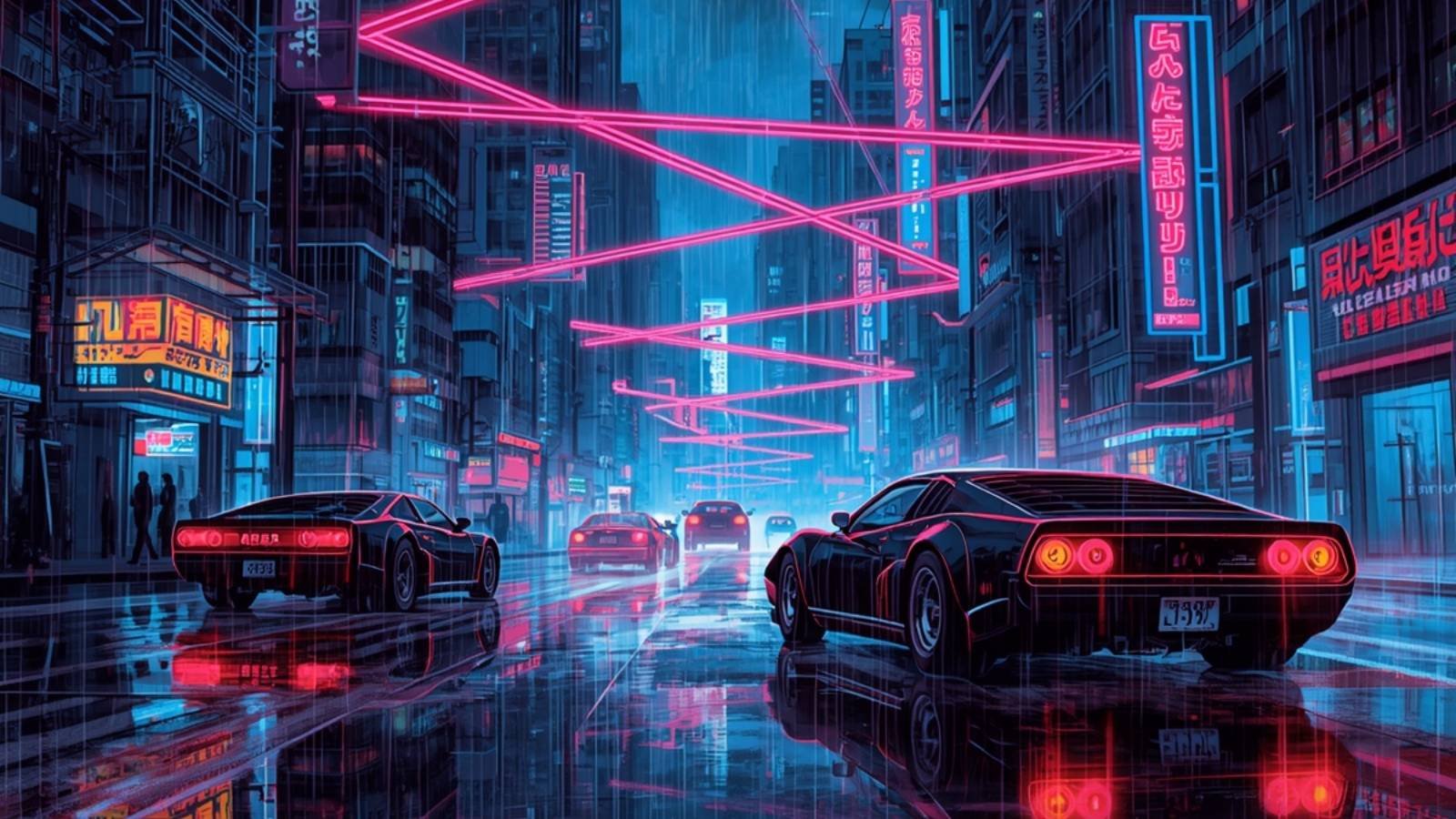
The synthwave scene has never just been about the music. For every pulsating analog bassline and heavy gated snare drum, there is a sprawling, neon-drenched visual world backing it up. The retro-electronic movement relies just as heavily on its visual identity as it does on its sound. While pioneer producers like Kavinsky and Timecop1983 defined the sonic landscape of the 1980s revival, a highly dedicated group of digital painters, motion graphic designers, and illustrators defined its absolute look.
If you are obsessed with the romanticized 1980s retro-future aesthetic, VHS tracking glitches, and towering dystopian cyberpunk cityscapes, your daily social media feed is likely missing out on some serious inspiration. To fully immerse yourself in the culture, here are 10 striking cyberpunk and synthwave visual artists you absolutely need to follow right now.
1. Imperial Boy (Teikoku Shōnen)
While his portfolio is not strictly limited to the traditional “neon grid” synthwave style, Imperial Boy is the undisputed king of the cozy cyberpunk and solarpunk aesthetic. His staggering, hyper-detailed anime cityscapes look like they were pulled directly from the background art of a high-budget 1990s feature film like Ghost in the Shell or Akira.
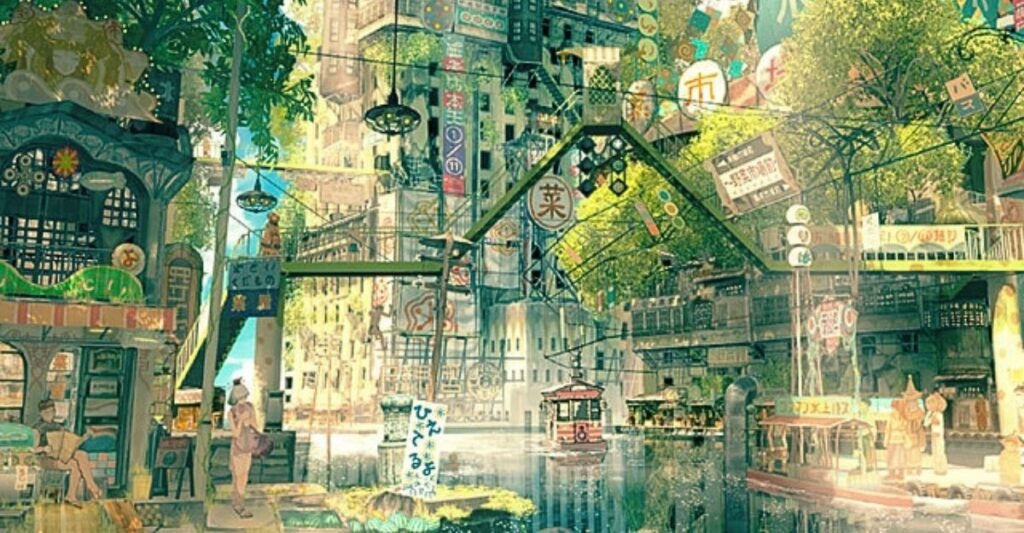
His intricate architectural drawings force you to zoom in and explore every hidden alleyway, glowing vending machine, and tangled power line. His world-building is so dense and captivating that it demands a closer look—which is exactly why we recently published a massive deep-dive exploring the magical world of Imperial Boy.
2. Kidmograph (Gustavo Torres)
Gustavo Torres, operating globally under the moniker Kidmograph, is an absolute legend in the retrowave motion graphics scene. If you have ever seen a seamlessly looping animation of a rotating wireframe skull, an endless neon-lit highway, or a chrome Delorean driving into a digital sunset, chances are it was his creation. Kidmograph practically invented the modern animated Spotify canvas for electronic producers, establishing an iconic benchmark for retro-CGI loops.
3. James White (Signalnoise)
You simply cannot talk about the 1980s Outrun aesthetic without bowing to the influence of James White. Operating as the founder of Signalnoise, his vibrant, chrome-lettered, laser-grid artwork has graced album covers for massive synth-rock bands like Gunship and Muse, as well as official promotional posters for modern cult-classic films like Drive. If you love the high-octane, over-the-top cinematic action aesthetics, Signalnoise’s neon-soaked portfolio will become your new obsession.
4. Josan Gonzalez (Deathburger)
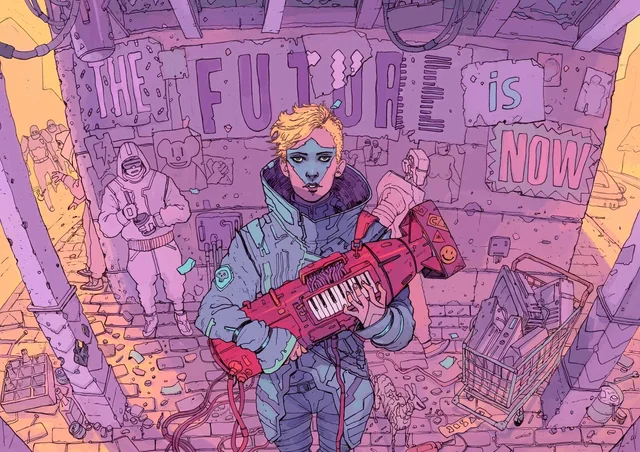
Stepping away from the clean neon lines, Josan Gonzalez brings raw grit and grime back to the cyberpunk genre. His famous, successfully crowdfunded artbook series, The Future Is Now, features highly intricate, Moebius-style line art depicting a dystopian future run by VR-addicted cyborgs, rogue androids, and street-level hackers. It is gritty, chaotic, and visually overwhelming in the best way possible, perfectly capturing the darker, more cynical side of the sci-fi spectrum.
5. Kilian Eng
Kilian Eng’s breathtaking artwork leans heavily into the surreal, retro-sci-fi fantasy popularized by classic 1970s and 1980s Heavy Metal magazines and Moebius comics. His use of muted pastel color palettes, towering monolithic alien architectures, and mysterious wandering astronauts perfectly capture the mood of atmospheric, cinematic synth soundtracks. His work feels less like an action movie and more like a quiet, philosophical journey across a forgotten planet.
6. Mad Dog Jones (Michah Dowbak)
Mixing classic cyberpunk Tokyo aesthetics with citrus-hued neon coloring, Mad Dog Jones creates digital art that feels deeply nostalgic yet distinctly futuristic. His work often features lonely figures surrounded by dense urban technology, holographic signs, and scattered cybernetic parts.
The juxtaposition of human isolation and massive technological sprawl makes his portfolio the perfect visual companion to heavy, driving darksynth masterworks like Lazerhawk’s Skull and Shark.
7. Simon Stålenhag
Simon Stålenhag has mastered a very specific and haunting niche: retro-futuristic alternate history. His digital paintings blend mundane, foggy Swedish countrysides and quiet suburban neighborhoods with colossal, decaying mechs, hovering anti-gravity ships, and massive cooling towers. His work was so visually groundbreaking and emotionally resonant that it inspired the hit Amazon Prime sci-fi series Tales from the Loop.
8. Ariel ZB
Ariel ZB is a powerhouse illustrator responsible for some of the most recognizable modern synthwave cover art in the industry. He has painted definitive album covers for major genre heavyweights, including The Midnight and Scandroid. His signature style perfectly emulates the hand-painted VHS box covers of classic 1980s sci-fi, horror, and action B-movies, bringing an authentic analog warmth to the digital music scene.
9. Visualdon (Don Mupasi)
If you have ever tuned into a 24/7 chillwave or synthwave radio stream on YouTube to study or work, you have undoubtedly seen Visualdon’s mesmerizing art. He specializes in endless, hypnotic 3D animation loops featuring lonely astronauts walking through glowing neon transit tunnels, retro sports cars gliding smoothly in the rain, and giant cassette tapes floating through deep space. His loops are the visual definition of relaxation.
10. Fvckrender (Frederic Duquette)
Fvckrender pushes the absolute boundaries of digital art into glossy, surreal 3D renders. His futuristic portfolio features highly reflective chrome, glowing crystalline structures, floating botanical elements, and hyper-realistic robotics. By blending the digital outrun aesthetic with modern, high-fashion CGI, Fvckrender represents the bleeding-edge evolution of where cyberpunk art is heading in the 2020s and beyond.
Frequently Asked Questions (FAQ)
What is the synthwave visual aesthetic called?
The visual art style associated with synthwave music is commonly referred to as Outrun (named after Kavinsky’s iconic 2013 debut album), Retrowave, or Neon-Cyberpunk. Key visual hallmarks include neon pink and cyan color palettes, glowing wireframe grids, 1980s sports cars (especially the Lamborghini Countach or Ferrari Testarossa), wireframe setting suns, and deliberate VHS tracking artifacts.
Who created the official poster art for Kung Fury?
While the 2015 cult-classic short film was written and directed by David Sandberg, the iconic 1980s-style theatrical poster art for Kung Fury was illustrated by Swedish artist Andreas Bennwik. His work perfectly captured the over-the-top, action-movie essence of the film.
How are synthwave and cyberpunk art connected?
While cyberpunk focuses on a high-tech, low-life dystopian future dominated by megacorporations and underground hackers, synthwave art represents a romanticized, nostalgic vision of how the 1980s imagined the future. The two genres frequently intersect through shared visual motifs like neon lighting, retro technology, and synth-driven atmospheres, often blending together in modern digital art.