
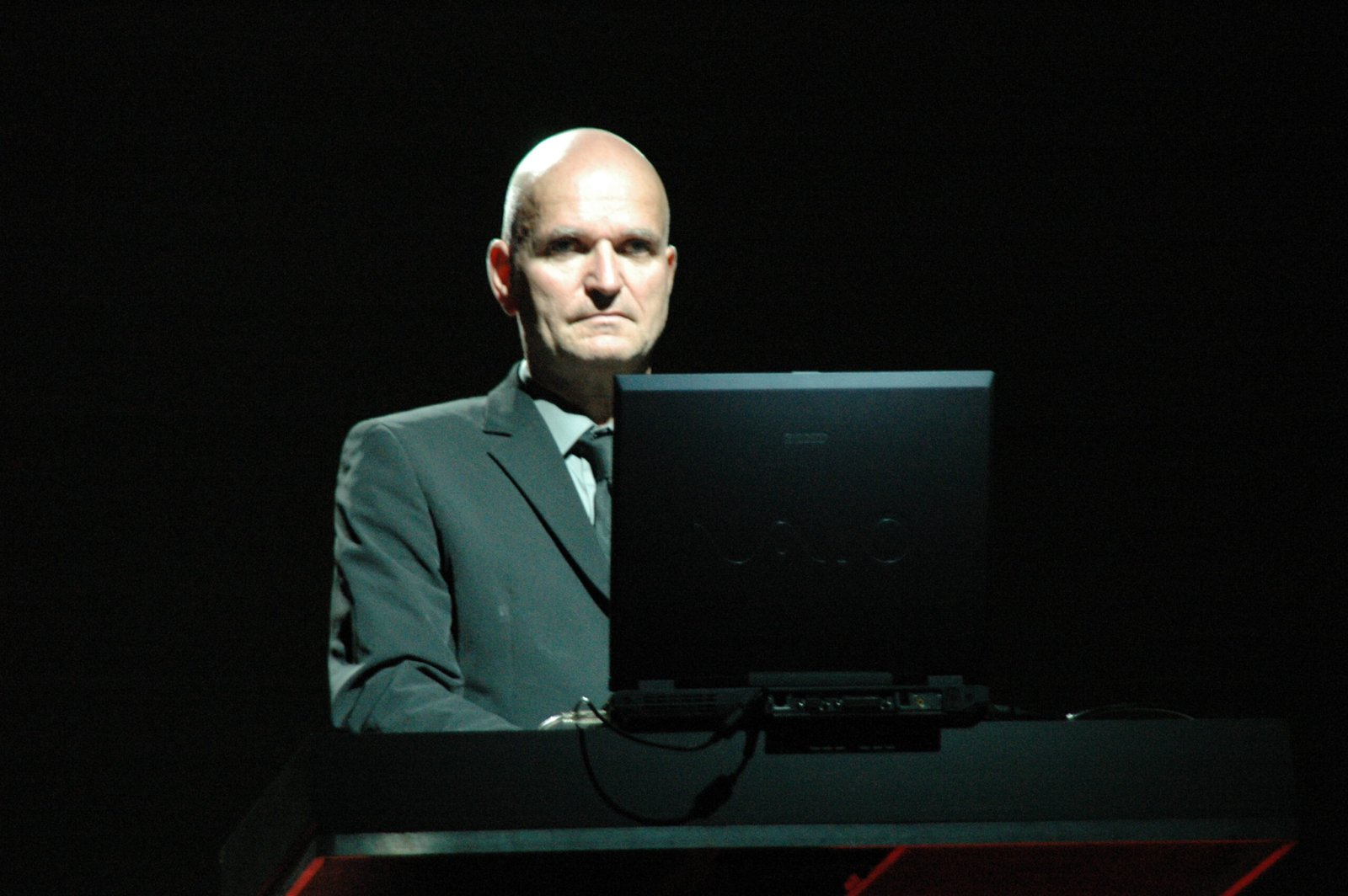
In 1997 the Frankfurt producer Moses Pelham looped two seconds of Kraftwerk’s 1977 track “Metall auf Metall” into Sabrina Setlur’s single “Nur mir.” He never asked the band for permission.
On 3 September 2026, Germany’s Federal Court of Justice ruled that the sampling was lawful, closing the central question in a case that had reached the court six times over 27 years.
The sample is a metallic, clanging percussion figure that appears about 35 seconds into “Metall auf Metall,” from Kraftwerk’s album Trans-Europe Express.
Pelham copied two seconds of it and ran it as a repeating loop through “Nur mir,” buried under guitars and a hip-hop beat as fundamental to the genre as the Roland TR-808. He said in court that he did not know the original track’s name, and had found the sequence in his own tape archive while looking for a cold contrast to Setlur’s vocals.
Ralf Hütter and fellow Kraftwerk members sued at the Landgericht Hamburg in 1999, seeking an injunction and damages.
Hamburg’s regional court ruled for Kraftwerk in 2004 and its appeals court upheld that verdict in 2006. The Bundesgerichtshof (BGH), Germany’s top civil court, sent the case back in 2008 over unclear reasoning.
In December 2012 the BGH ruled against Pelham outright, holding that sampling was lawful only if a musician could not simply replay the sequence themselves.
A constitutional fight over two seconds
Hütter treated the case as a matter of ownership. Testifying before Germany’s Constitutional Court in November 2015, he said, as reported by Der Spiegel: “The seventh commandment applies: thou shalt not steal.”
The Constitutional Court sided with Pelham instead, ruling on 31 May 2016 that the BGH’s “replayability” test ignored artistic freedom and that sampling is one of the defining techniques of hip-hop.
In 2017 the BGH asked the Court of Justice of the European Union whether Germany’s copyright exceptions matched the EU’s 2001 Copyright Directive.
The EU court ruled on 29 July 2019 that copying even a short sample without permission can infringe a producer’s rights unless the result is unrecognisable to the ear. It also found that Germany’s old “free use” exception did not comply with EU law.
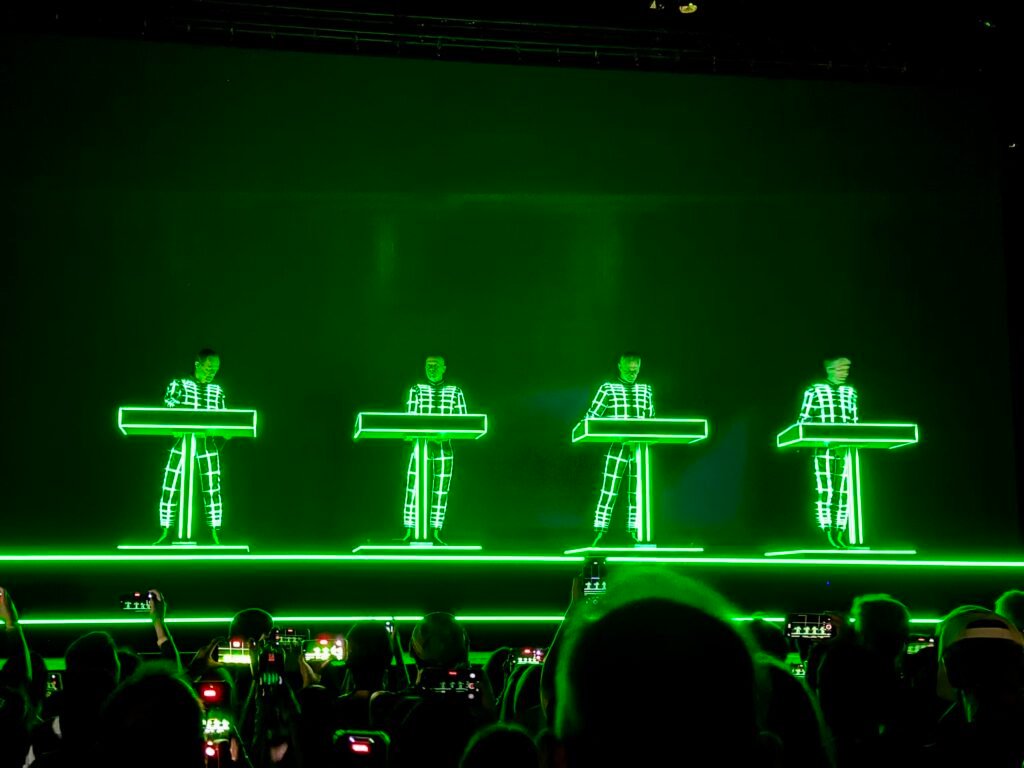
Florian Schneider, Kraftwerk’s co-founder and a lead plaintiff, died in April 2020 at the age of 73, with the case still open. That same month the BGH applied the EU ruling, found Pelham should not have used the unaltered, recognisable sample, and sent the dispute back to Hamburg again.
Pastiche becomes the deciding word
Germany rewrote its copyright law in June 2021, adding a new exception for “pastiche” use. Hamburg’s appeals court then split the dispute into three periods in April 2022, finding no infringement before December 2002, infringement from December 2002 to June 2021, and lawful pastiche use from June 2021 onward.
The ruling on the first period became final without further appeal. Kraftwerk challenged the finding on the newest period, and in September 2023 the BGH referred the case to the EU court a second time, asking what a pastiche actually is.
The Court of Justice answered on 14 April 2026. A pastiche, it ruled, is a recognisable imitation of a work that creates an artistic dialogue with it, and that imitation does not need to be intentional on the copier’s part.
On 3 September 2026 the BGH, case I ZR 74/22, applied that standard and dismissed Kraftwerk’s appeal for the post-2021 period. Presiding judge Thomas Koch said anyone familiar with the original electronic-era Kraftwerk piece can recognise the borrowed element, and that moving it from electronic music into hip-hop amounted to an artistic dialogue.
The decision does not make sampling automatically free to use. It sets a specific test, recognisable borrowing plus an artistic dialogue with the source, for courts to apply case by case, much as Donna Summer’s “I Feel Love” showed in that same year, 1977, that one borrowed machine could reshape a genre without a single lawsuit.
A separate constitutional complaint covering the 2002-2021 period, when Pelham’s use of the sample was still ruled unlawful, remains before Germany’s Constitutional Court, with a decision expected later in 2026.
Lead photo: Daniele Dalledonne / Wikimedia Commons, CC BY-SA 2.0