
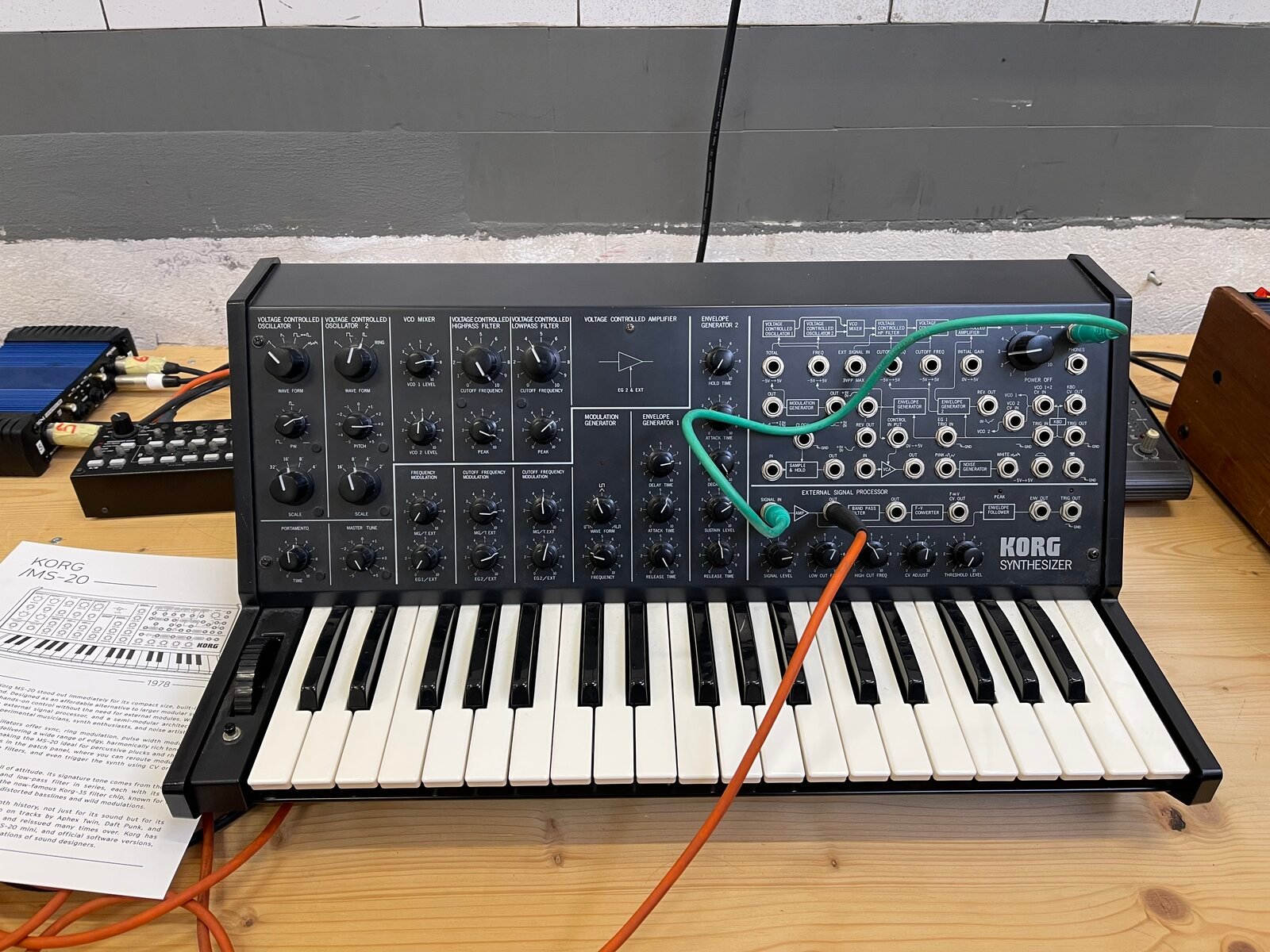
Korg’s phase8 makes sound without an oscillator. The $1,149.99 instrument strikes eight tuned steel resonators with electromagnetic coils, then picks up the vibration and feeds it into a synthesizer engine for shaping, instead of running the oscillator-filter-amp chain used in synths since the Yamaha DX7.
Korg calls the method “Acoustic Synthesis.” The finished unit was unveiled at the 2026 NAMM Show in Anaheim, California, held 22 to 24 January, after Korg’s Berlin research team showed early prototypes at Superbooth in 2024 and again in 2025.
How the resonators make a sound
Under each of the eight voices sits a coil that acts like a small hammer, striking a steel bar on command instead of driving a traditional oscillator circuit, the way an analogue drum machine like the Roland TR-808 fires its kick from a simple RC circuit.
A pickup under the bar catches the resulting vibration and routes it back into phase8’s electronics, where envelope and modulation controls can shape the acoustic signal like any other synth voice.
Korg ships 13 chromatically tuned resonators with the instrument, and only eight install at a time, so players can swap and retune the bars to set their own scale. The whole unit weighs 1.71kg and measures 231mm wide, closer to a tabletop groovebox than a full synth, according to a teardown by Yanko Design.
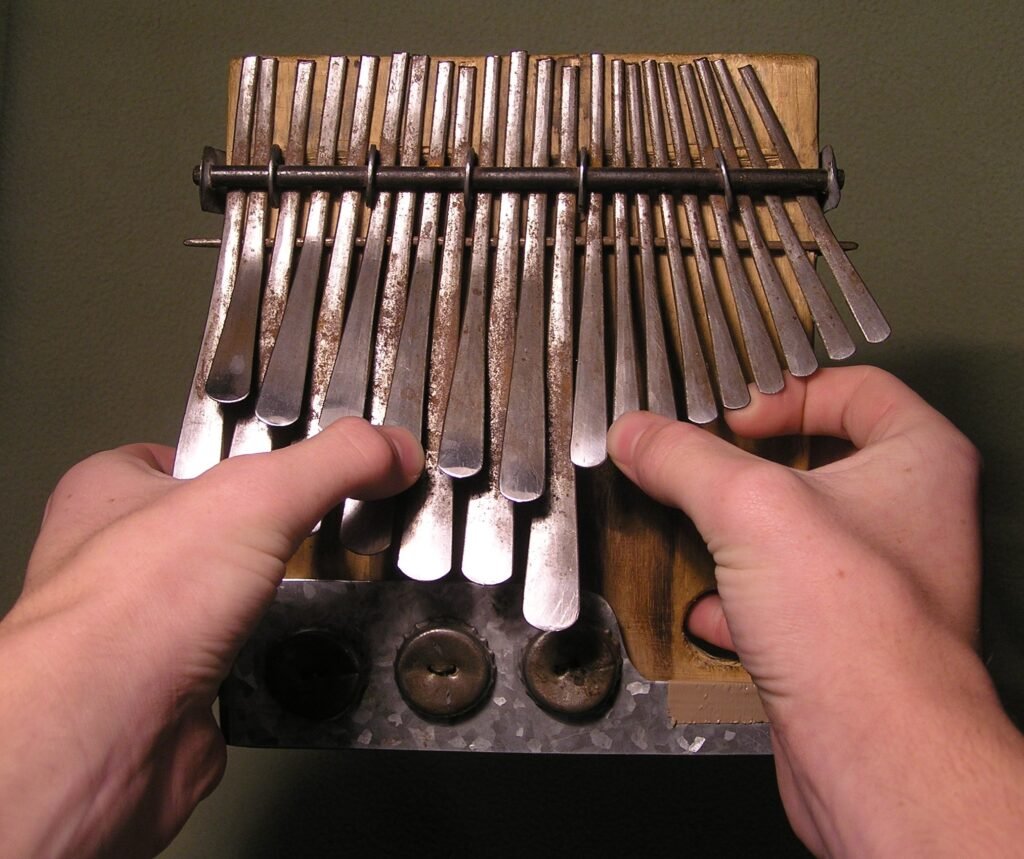
Because the sound comes from a physical object and not a sample, Korg tells players to touch, pluck, strum or mute the resonators, or rest small objects on top of them. At Korg’s NAMM booth, staff had stones, wooden sticks and magnets on hand for visitors to try, MusicTech reported.
An AIR slider on the panel raises or lowers how much of that raw acoustic sound reaches the output, alongside a polymetric step sequencer that runs independently on each of the eight voices and stores sequences across eight memory slots.
Connectivity runs to MIDI in and out over 3.5mm TRS, USB-C for USB-MIDI and firmware updates, sync in and out, a CV input, a quarter-inch line output and a headphone jack. Early buyers who preordered also got three limited-edition percussive resonators, cut outside the standard chromatic set and sold only as part of that presale package.
Built inside Korg’s Berlin research office
phase8 is the first commercial release from Korg Berlin, the research office Korg’s Tatsuya Takahashi set up to explore ideas outside the company’s usual analogue and digital lines, Sonic State reported from the NAMM floor. Takahashi, who designed the Korg Monologue, told MusicRadar the instrument is “beyond analogue vs digital” and “even beyond electronics.”
“It would have been easy for them to continue making analogue synths, but they wanted to do something different,” Korg Berlin’s Rachel Aiello told MusicTech at the same show.
A year earlier, Takahashi had told Synthtopia that Korg Berlin expected to price the instrument under 1,000 euros. The finished unit launched higher, at $1,149.99 in the US.
Preorders opened the day of the NAMM announcement, and Korg told Mixmag it expected to ship the first units in April, around the same time new hardware like the Arturia PolyBrute 12 was landing on desks; more of this year’s new synth gear is in our Tech section.
By August, CDM’s review found a delicate, often quiet instrument it compared to a music box: the resonators were cut by an actual music-box maker, and Korg had hosted percussionist Bex Burch in its Berlin studio to record a full album on the instrument.
Sound designer Richard Devine posted his own stress test in February, running MIDI scripts into the tines alongside magnets, tin foil, metal rods and springs to push the resonators past their factory behaviour. YouTuber Ziv Eliraz had already put the unit through a 20-minute review the week it launched, walking through the sequencer and the AIR fader before closing on three live jams.
Lead photo: 1904.CC / Wikimedia Commons, CC BY 4.0