
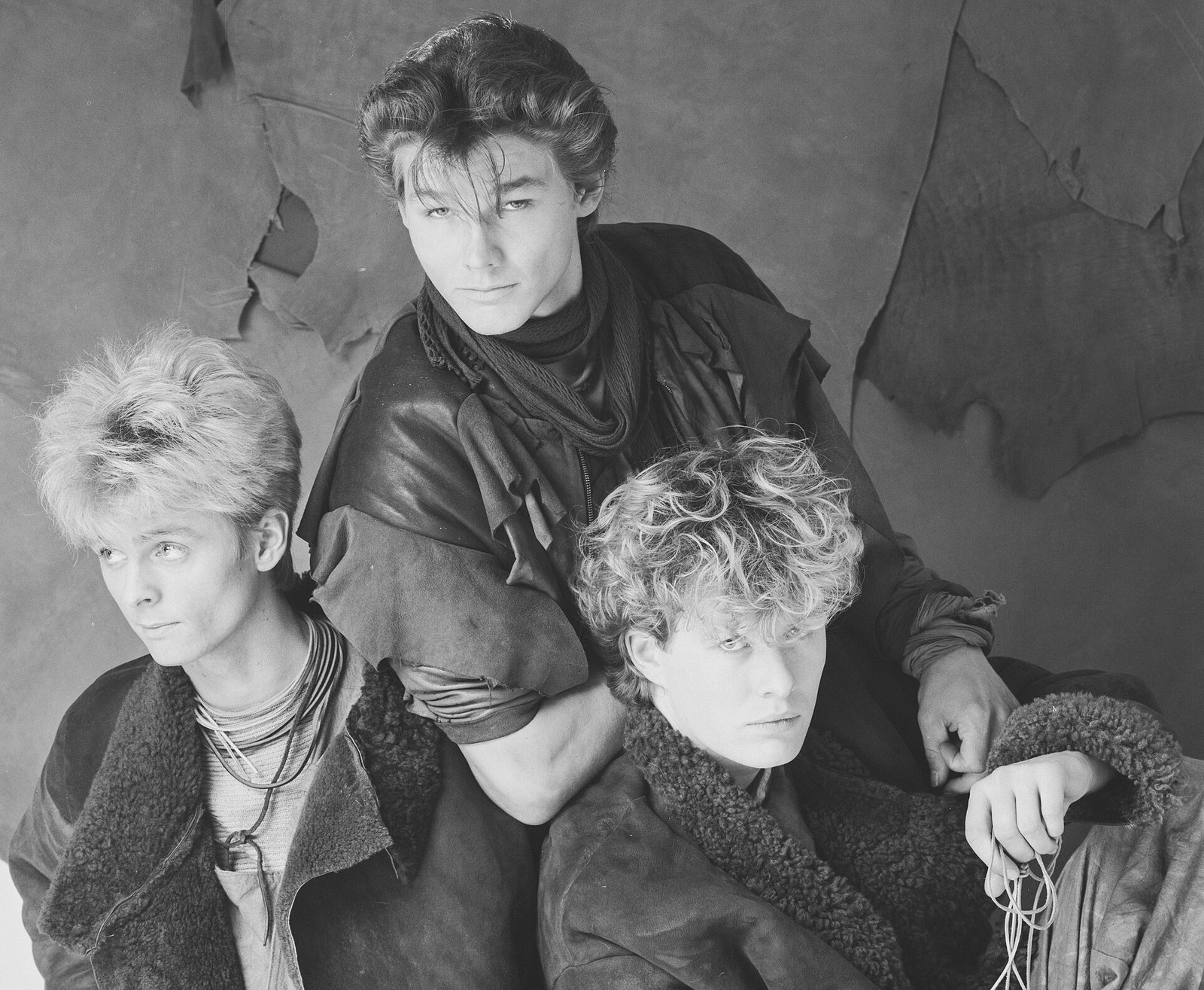
a-ha released “Take On Me” twice and watched it fail twice.
Then Steve Barron’s pencil-sketch video reached MTV, and on the Billboard Hot 100 dated 19 October 1985 the Norwegian trio’s single was No. 1. The first version came out in October 1984. In a 2011 Classic Tracks feature, Sound On Sound’s Richard Buskin put its sales at 300 copies worldwide and its UK chart peak at No. 137.
The song that flopped twice
That 1984 recording began with producer Tony Mansfield, a Fairlight specialist, and was then largely re-recorded by engineer Neill King.
Its video showed the band performing against a plain blue background. Warner Bros’ head office in the US still believed in the song. In early 1985 it brought in Alan Tarney, the producer of Cliff Richard’s “We Don’t Talk Anymore”, to cut it again at RG Jones studios in Wimbledon.
“So all I did was recreate the original demo, the one from Sydenham,” Tarney told Sound On Sound.
His own Roland Juno-60 played the main riff, parts also ran through his Yamaha DX7, and Pål Waaktaar programmed the LinnDrum. The whole job took about two days. “We spent maybe a day recording the song and then another day mixing it,” Tarney said.
Warner rushed the new version out in April 1985. A half-hearted campaign by the label’s UK office meant the single “still did nothing”, in Sound On Sound’s words.
Steve Barron’s 3,000 drawings
The US office then paid for a new video.
Sound On Sound puts the budget at $100,000, backed by Warner executive Jeff Ayeroff. Label executives had been struck by Commuter, a five-minute student film by animator Michael Patterson. It used rotoscoping, drawing over live-action footage frame by frame, and Patterson was hired with his wife, Candace Reckinger.
Barron, whose earlier videos included Michael Jackson’s “Billie Jean”, shot Morten Harket and actress Bunty Bailey on film at a London cafe and on a sound stage.
Over 16 weeks, Patterson then sketched some 3,000 drawings over individual frames, the BBC reported in 2010. The label gave Barron time as well as money. “They said, ‘we’ll give you as long as you want and we’ll release it when you’ve finished it’,” he told the BBC.
Warner sent the finished clip to dance clubs and MTV a full month before the single reached shops and radio. “The video bought us time because the song was not an easy, immediate pop hit,” Harket said.
From No. 137 to the top of the Hot 100
The single entered the Hot 100 at No. 91 on 13 July 1985 and reached No. 1 in its 15th week, on the chart dated 19 October.
That made a-ha the first Norwegian band to top the Hot 100. It lasted one week. Whitney Houston’s “Saving All My Love for You” took over on 26 October, and Jan Hammer’s Miami Vice Theme was No. 1 by 9 November.
The third UK release entered the Official Singles Chart at No. 55 on 28 September 1985 and reached No. 2 on 26 October. It stayed there three weeks behind Jennifer Rush’s “The Power of Love”.
At the MTV Video Music Awards on 5 September 1986 the clip won six awards, including Best Concept Video, Best Direction, Best Special Effects and Viewer’s Choice. Video of the Year went to Dire Straits’ “Money for Nothing”, and Kate Bush’s Running Up That Hill was a Best Female Video nominee that night. More music-video history sits in our Soundtracks & Cinema section.
In December 2019 a-ha released a 4K restoration made from the original 35mm film reels. The clip passed one billion YouTube views on 17 February 2020, according to Billboard.
In September 2024 it became the first music video from the 1980s to reach two billion views on YouTube.
Lead photo: Sheila Rock / Wikimedia Commons, CC BY-SA 2.5