
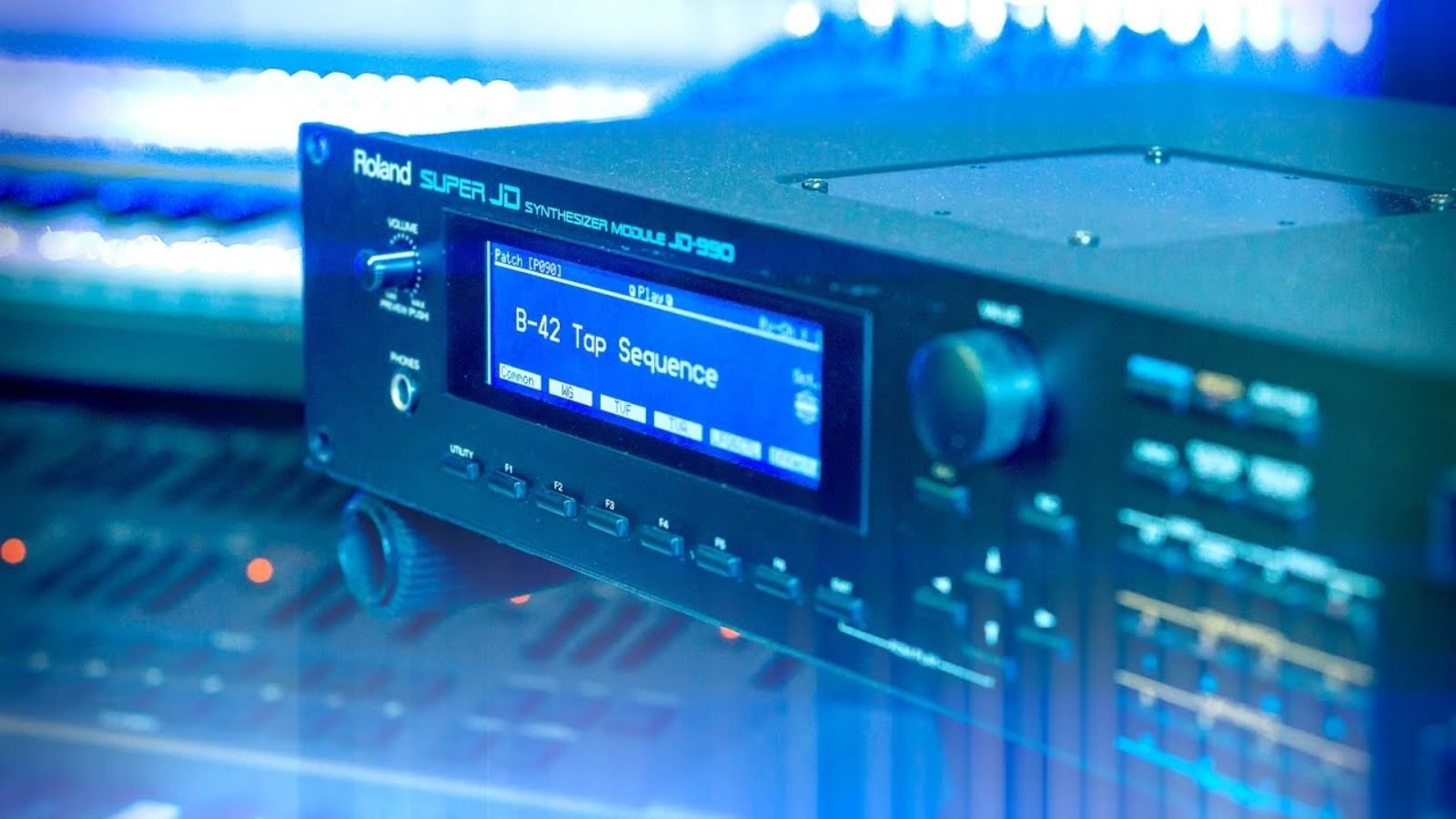
For over a decade, the synthwave and retro-electronic production scenes have been utterly dominated by the thick, warm, and drifting analog sounds of the 1980s. Producers have meticulously chased the drifting oscillators of the Prophet-5, the massive brass of the Oberheim OB-X, and the legendary chorus of the Roland Juno-106. But as the genre matures, the boundaries of nostalgia are shifting forward. The neon grid is giving way to the early CGI landscapes of the 1990s, and the soundtrack to this new era demands a completely different sonic engine.
Enter the Roland JD-990.
Once the crown jewel of 1990s digital synthesis, the JD-990 provided the glassy digital pads, aggressive frequency cross-modulation, and razor-sharp textures that defined the decade. Now, thanks to the incredibly talented development team known as The Usual Suspects, this legendary hardware has been resurrected as the Roland JD-990 emulator JADE.
While other corners of the internet are busy debating the legal gray areas of ROM file emulation, here at Future City Records, we are looking at what this means for the music. For producers operating in the vaporwave, chillwave, and 90s-nostalgia darksynth spaces, JADE isn’t just a fun new toy—it is the ultimate secret weapon you need to evolve your sound.
The Vibe Shift: Why 90s Digital is the New 80s Analog
To understand why the Roland JD-990 emulator JADE is such a massive deal, we have to look at where retro-electronic music is heading. The 1980s outrun aesthetic—defined by warm, analog subtractive synthesis—has been thoroughly explored. Today’s producers are looking for something colder, wider, and distinctly more cybernetic.
The 1990s digital rompler aesthetic offers exactly that. It is the sound of early PlayStation loading screens, dial-up modems, and dystopian anime soundtracks. It is characterized by:
- Glassy Digital Pads: Ethereal, crystal-clear sustained chords that sound like floating through a digitized cyber-space.
- Abrasive Digital Grit: Thanks to early digital-to-analog converters and built-in distortion effects, these synths can bite and cut through a mix in a way that smooth analog gear simply cannot.
- Complex Evolving Textures: Multi-layered PCM waveforms allow for cinematic, evolving soundscapes that fit perfectly into modern chillwave and atmospheric darksynth.
The Legacy of the “Super JD”
Released in 1993, the Roland JD-990 (often affectionately dubbed the “Super JD”) was essentially the rackmount, steroid-injected evolution of the highly successful JD-800 keyboard. But it wasn’t just a repackaged synth; it was a massive upgrade.
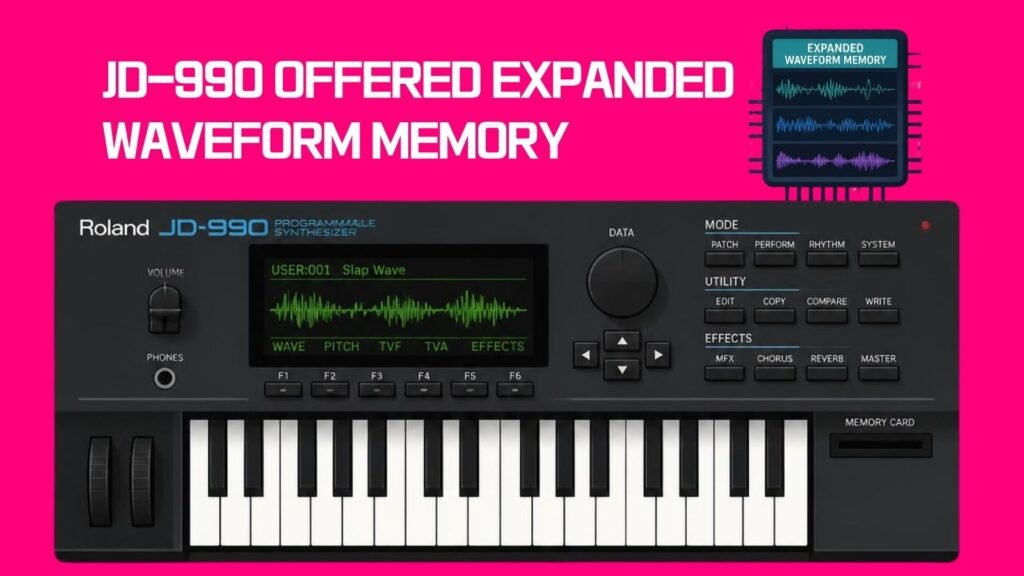
The JD-990 offered expanded waveform memory, intricate oscillator sync, and frequency cross-modulation. Most importantly, it featured a robust built-in multi-FX processor. You could route those pristine digital waveforms through onboard distortion, phaser, and delay, creating massive, ready-to-record patches that sounded like a finished track right out of the box.
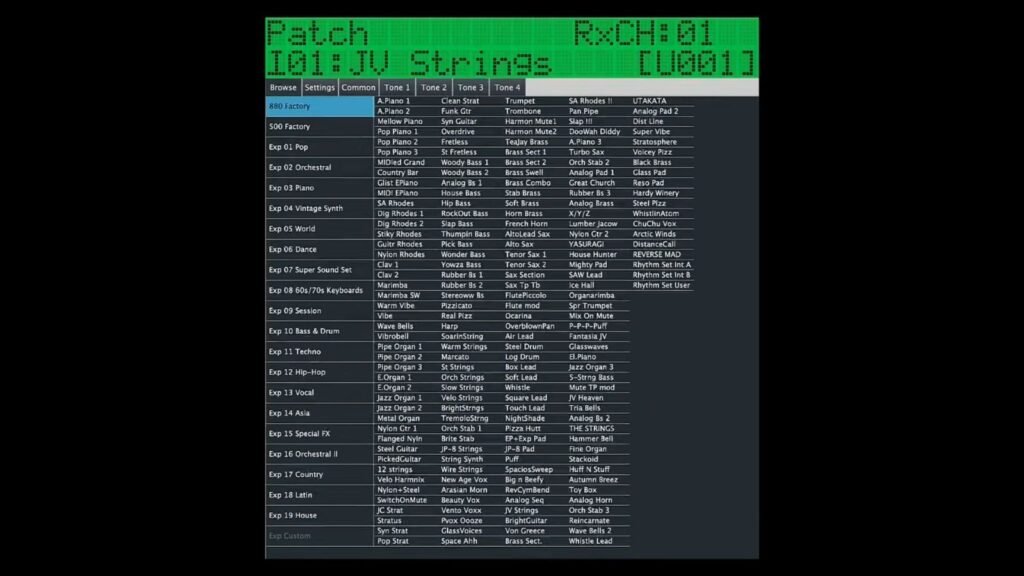
But the real secret to its sound lies in the sample rate. While later 90s racks like the ubiquitous JV-1080 downsampled their waveforms to 32kHz and used destructive compression to save chip space, the JD-990 processed everything at a pristine, uncompressed 44.1kHz. This is why JADE will give you a sparkling, crystal-clear top-end that other 90s emulations completely miss.
For producers today, owning an original physical JD-990 is a costly endeavor, with second-hand units fetching outrageous prices on the vintage market. This is exactly why the arrival of the Roland JD-990 emulator JADE is a watershed moment for the bedroom producer community.
The Roland JD-990 (Super JD) At A Glance
| Feature | Details |
| Type of Synthesis | Digital Sample-based Subtractive Synthesis (ROMpler): The JD-990 uses PCM sampled waveforms (6MB of internal ROM) processed through a traditional subtractive synthesis architecture. It features highly respected digital multi-mode filters (Time Variant Filters – TVF) with resonance, complex envelopes, oscillator sync, and frequency cross-modulation (FXM). |
| Kind of Sound | It is legendary for producing pristine, glassy digital pads, ethereal evolving textures, sharp digital bells, and surprisingly warm “analog-style” brass and strings. Its onboard multi-effects (distortion, phaser, chorus) gave it a massive, polished, ready-for-mix studio sound. |
| Famous Users | Vangelis, The Prodigy, Faithless, Apollo 440, ATB, Mirwais, Klaus Schulze. |
Famous Tracks Made with the JD-990
| Artist / Composer | Famous Track | The JD-990’s Role in the Track |
| Faithless | “Insomnia” (1995) | The massive, iconic plucked pizzicato synth riff at the climax of the techno anthem is a slightly modified version of the JD-990’s internal preset Patch A-43 (“Pizza Hutt”). |
| Sash! | “Encore Une Fois” (1997) | Also prominently utilized the famous “Pizza Hutt” (Patch A-43) preset for its driving, main melodic euro-dance hook. |
| Apollo 440 | “The Machine in the Ghost” (1999) | Used the JD-990 extensively to create the lush, atmospheric background textures and pads running throughout the track. |
| Jack Lenz & Brad McDonald | Goosebumps (TV Series Theme) | The creepy, iconic 90s TV show theme heavily featured JD-990 patches like “Pipe Organ” (A-31), “Crystal Rhodes” (63), and “Wave Bells” (B-12). |
JADE: The Ultimate Secret Weapon for Producers
Developed by The Usual Suspects—the same brilliant minds who brought us the JE-8086 (Roland JP-8080) and Xenia (Waldorf Microwave II/XT) emulators—JADE is currently in public alpha for project supporters on Discord.
Instead of painstakingly trying to reverse-engineer the circuitry, JADE operates as a true ROM simulator. By loading the original Roland ROM file, the plugin accurately replicates the exact mathematical architecture and multi-mode TVF filters of the 1993 hardware.
Why is this important for your next synthwave track? Because it offers instant, authentic 90s nostalgia without relying on generic sample packs. You can program complex, four-tone patches with analog-simulated pitch drift, allowing you to bridge the gap between 80s warmth and 90s digital precision.
The Sound Design Secret: Per-Tone Panning
Unlike its predecessor (the JD-800), the JD-990 introduces Per-Tone Panning. This means you can take those four independent waveform layers inside a single JADE patch and pan them completely wide across the stereo field. For chillwave and dreamwave, this creates an impossibly massive, 3D stereo image that wraps around the listener.
A Quick Warning for Modern Sound Designers
As you dive into JADE, be aware of a notorious vintage Roland quirk. If you push the Time Variant Filter (TVF) resonance past 40% while keeping keytracking at 100%, the digital engine will trigger harsh clipping distortion. Keep a close eye on your gain staging if you want to keep those icy pads smooth!
Navigating the Expansion Boards
The biggest question for JADE is how it handles expansion slots. The original hardware could only map 64 expansion patches to memory at a time. Because JADE is a true chip simulation, it will support original expansion ROM images—giving synthwave producers access to the holy grail “Vintage Synth” (SR-JV80-04) card, hopefully bypassing the structural memory headaches of the 1990s.
Escaping the Juno-106
We recently did a deep dive into Behind Kavinsky’s Sound, detailing how the legendary French producer relied heavily on the Roland Juno-106 and Yamaha DX7 to pioneer the outrun genre. While the Juno’s analog chorus is responsible for iconic tracks like “Nightcall”, relying too heavily on that single sound can make modern synthwave tracks feel derivative.
By integrating the Roland JD-990 emulator JADE into your Digital Audio Workstation (DAW), you can contrast those warm analog basslines with the JD-990’s icy, atmospheric pads. Layering 80s analog grit beneath 90s digital sheen is the exact formula top-tier producers are using right now to make their mixes sound impossibly huge and three-dimensional.
The Hardware vs. Software Debate Resolved
In the retro-synth community, the debate over physical hardware versus software plugins is endless. As we highlighted in our PolyBrute 12 vs Behringer JN-80 hardware spotlight, tactile control and physical presence are highly coveted.
However, when a free, CPU-efficient plugin like JADE can perfectly simulate the exact digital brain of a $1,200 rackmount module, the software argument becomes impossible to ignore. JADE democratizes the 90s digital sound, allowing bedroom producers to access world-class textures without draining their studio budgets. It empowers artists to focus entirely on the vibe of their music rather than the limitations of their bank accounts.
Frequently Asked Questions (FAQ)
What is the Roland JD-990 emulator JADE?
JADE is a free software plugin currently in development by The Usual Suspects. It functions as a highly accurate ROM simulator of the classic 1993 Roland JD-990 (Super JD) rackmount synthesizer.
Why is the Roland JD-990 important for synthwave and vaporwave?
The JD-990 represents the pinnacle of 1990s digital synthesis. Its glassy, ethereal pads, frequency cross-modulation, and built-in distortion effects perfectly capture the nostalgic, retro-futuristic, and atmospheric aesthetic required for modern chillwave, vaporwave, and darksynth production.
How does the JADE emulator differ from standard VST plugins?
Unlike typical VST plugins that attempt to loosely mimic a vintage synthesizer’s behavior through new code, JADE is a direct ROM simulator. It requires the original hardware’s ROM file to function, meaning it generates the exact mathematical audio output and limitations of the original 1993 unit.
What is the price of the JD 990 Jade Emulator?
JADE Roland JD-990 emulator is planned to be a free software simulator, but it is currently in its development stage. But you can access alpha by just paying $20 donation or contribution via community channels. The free release is to be expected later this year.
Ready to swap your 80s analog warmth for 90s digital precision?