
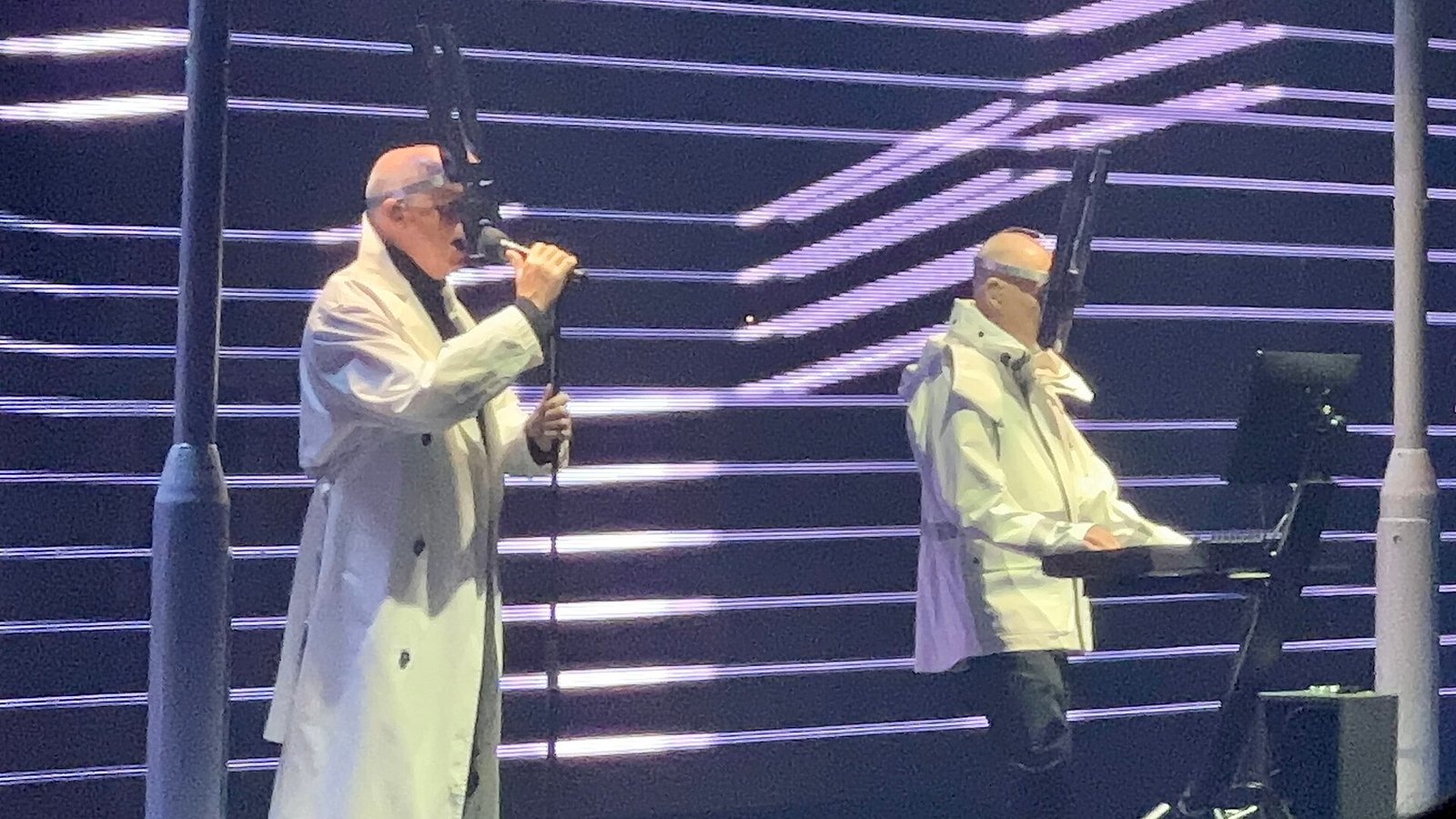
Pet Shop Boys released A Man from the Future on 9 October 2026, an eight-part album about the life of the codebreaker and computer pioneer Alan Turing.
They first performed it 12 years ago, at the BBC Proms in the Royal Albert Hall on 23 July 2014. Neil Tennant now calls that night “essentially a demo with an orchestra.”
A Prom that went out live
Tennant and Chris Lowe wrote the piece in 2012 and 2013 with Andrew Hodges, the Oxford mathematician whose 1983 biography Alan Turing: The Enigma was the loose basis for the film The Imitation Game.
At the 2014 premiere they were joined by the BBC Concert Orchestra and the BBC Singers, with Juliet Stevenson narrating text from the book. The Guardian’s review could not decide whether to call it “a pop oratorio” or “a classical audiobiography”, and noted that Tennant sang from a score kept in a large red folder.
“The reason it’s called A Man from the Future is twofold,” Tennant told Radio Times before that premiere. “Alan Turing invented what we now call the computer.” The other half was Turing’s openness about being gay, at a time when it was illegal.
Looking back now, both members say the Prom was not the finished work. “The Proms was a bit rushed,” Lowe told Radio Times last month.
“It was an exciting and nerve-racking evening because it was going out live on the radio,” Tennant added.
“Judging it afterwards, though, we thought it had got too big, and we always meant to come back to it,” he said.
Eight strings and a stack of analogue synths
The new version was recorded in a Berlin studio. Sven Helbig, the German composer who wrote the 2014 orchestrations, cut his score down to eight string players, now the Manchester Camerata Octet.
To make it “more electric”, the duo brought in the Dutch electronic programmer Maarten Vos. “He’s got loads of great analogue synths,” Lowe said, “so it gives more warmth and depth from the digital sounds that we were using.”
“This more electronic nature is true to the Alan Turing story,” Tennant said. “We’re talking about the man who invented the computer.”
Stevenson returns as narrator, and children from the Manchester Grammar School choir sing on four of the eight tracks. Hodges rewrote parts of the text, adding questions about artificial intelligence to the closing title track. “It was him who started off questions about what on earth artificial intelligence was going to mean,” Hodges said of Turing.
The same seven-minute title track uses an excerpt of Gordon Brown’s 2009 apology for Turing’s treatment, then the royal pardon granted in 2013.
A codebreaker’s life in eight tracks
The album runs in order from Turing’s schooldays to Cambridge, his wartime work on the German Enigma cipher, the first computers and his 1952 prosecution for gross indecency. The sixth track, “The Trial”, lasts just over seven minutes.
Turing died on 7 June 1954, aged 41. Tennant has doubts about The Imitation Game, which arrived a few months after the Prom: “I think Alan Turing would be surprised that the film about his life was called a thriller.”
The BBC premiered the recording on 4 October on Radio 6 Music and Radio 3. The CD and vinyl editions add a second disc with instrumental versions of all eight tracks.
It follows Nonetheless, which reached No. 2 in the UK in 2024. For more 80s synth-pop history, read how New Order’s Blue Monday sleeve lost money, the story of the Yamaha DX7, or how Bowie made “Heroes” in Berlin. More stories are in our artist section.
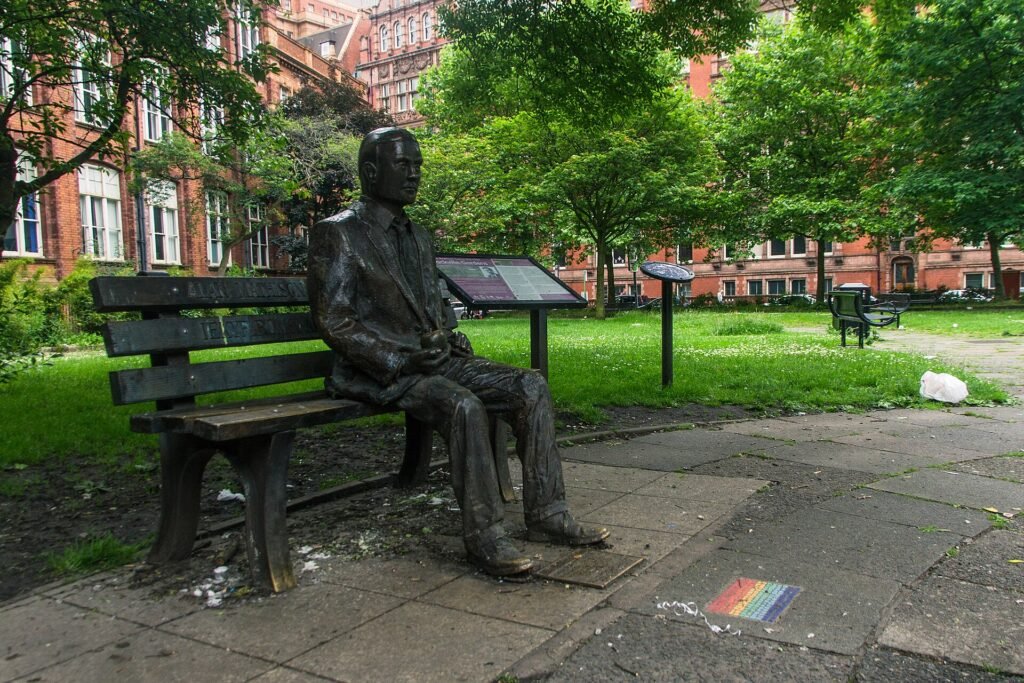
In Manchester, where Turing worked on early computers from 1948, a bronze of him holding an apple has sat on a bench in Sackville Gardens since 23 June 2001, which would have been his 89th birthday.
Lead photo: erintheredmc / Wikimedia Commons, CC BY 2.0