
Editorial Notice: This asset represents the official historical and technical restoration of the original soundtrack analysis published on Future City Records on September 25, 2013. As part of our 2026 cultural archive initiative led by Editor-in-Chief Sahil Chopra, this resource has been completely salvaged from our legacy database, purged of unverified asset endpoints, and expanded to detail the production timeline of Rockstar Games’ defining audio masterpiece.
The Los Santos Sonic Blueprint
When Rockstar Games unleashed Grand Theft Auto V in September 2013, it did not merely break global entertainment sales records it fundamentally shifted how licensed and original electronic music interacted with open-world environmental design. Prior entries in the franchise relied almost exclusively on standard radio dials, curating existing historical records to build a sense of time and place. Grand Theft Auto V shattered this paradigm by deploying a multi-layered, interactive original score alongside an expertly curated radio ecosystem.
While mass media outlets focused their attention on mainstream pop, hip-hop, and rock tracks, the electronic music community recognized a deeper achievement. Rockstar built an algorithmic audio engine capable of morphing based on player choices, while simultaneously turning its radio dial into a global megaphone for underground producers. This retrospective deconstructs the structural layout, specific hardware production techniques, and physical media legacy of the game’s iconic soundtrack.
Part I: The Interactive Score (The Tri-Partite Engine)
For the first time in the history of the franchise, Rockstar commissioned a completely original, non-radio score to dynamically back missions and ambient open-world exploration. The production was split into three distinct sonic lanes, overseen by a historic coalition of electronic, cinematic, and hip-hop pioneers. The goal was to capture the fragmented, manic energy of modern Southern California.
1. Tangerine Dream: The Ambient Avant-Garde
The inclusion of German electronic legends Tangerine Dream, led by the late Edgar Froese, brought decades of modular analog synthesis to the project. Froese and his team utilized classic step-sequencers and cascading ambient pads to capture the isolated, vast atmosphere of the Blaine County desert and high-altitude flight mechanics. Their work relied heavily on low-frequency oscillation (LFO) modulation, creating a distinct tension that shifts subtly as the player transitions from rural highways into urban spaces.
2. Woody Jackson: Cinematic Tension
Renowned for his previous atmospheric work on Red Dead Redemption and L.A. Noire, multi-instrumentalist Woody Jackson provided the organic connective tissue of the score. Jackson tracked live bass guitar motifs, surf-rock inspired guitar twangs, and dry, tight percussion pieces. His contributions represent the gritty reality of the game’s planned heist sequences, providing a sharp contrast to the digital soundscapes surrounding him.
3. The Alchemist & Oh No: Gritty Urban Realism
Representing the absolute vanguard of independent hip-hop production, this duo constructed the driving rhythm beds and sample-heavy loops that anchor the inner-city street mechanics. Utilizing vintage hardware samplers, they chopped obscure soul, funk, and industrial records into aggressive loops. These loops provide a constant kinetic drive during high-speed police pursuits and urban firefights.
The Unified Mix: DJ Shadow’s Engineering
To ensure these three disparate musical styles functioned as a cohesive ecosystem, Rockstar brought in legendary electronic producer DJ Shadow to engineer and arrange the interactive stems. Shadow took the sessions from all three teams and separated them into dynamic, layerable audio tracks. The game’s engine was programmed to track player velocity, danger levels, and character switches, instantly adding or subtracting stems (such as dropping out the drums and boosting Tangerine Dream’s analog pads during a stealth sequence) without a single audible cut.
Part II: Niche Radio and the Electronic Explosion
Beyond the background score, the in-game radio dial acted as a massive global catalyst for underground electronic sub-genres. Future City Records originally highlighted two specific stations that directly influenced the commercial trajectories of chillwave, synthwave, and experimental IDM over the subsequent decade.
Radio Mirror Park (Curated by Twin Shadow)
Radio Mirror Park served as the definitive home for indie-electronic, synth-pop, and new wave enthusiasts. Hosted by George Lewis Jr. (Twin Shadow), this station single-handedly pushed underground bedroom producers into mainstream consciousness.
The aesthetic vector of the station was built around driving 4×4 electronic percussion, heavily compressed side-chained basslines, and nostalgic, melancholic vocal melodies. It featured genre-defining anthems like Neon Indian’s “Change of Coast”, Toro y Moi’s “So Many Details”, and The Chain Gang of 1974’s “Sleepwalking”. The exposure provided by this channel transformed these niche tracks into viral phenomena, showcasing the immense power of AAA gaming as a taste-maker for modern electronic music.
FlyLo FM (Curated by Flying Lotus)
Steven Ellison (Flying Lotus) transformed his corner of the dial into an abrasive, brilliant clinic of avant-garde electronic, glitch-hop, and abstract beat-making. Hosted by his pitch-shifted alter-ego, Captain Murphy, FlyLo FM refused to compromise for a mainstream audience.
Mixing his own unreleased Brainfeeder catalog cuts with dense selections from Aphex Twin, Hudson Mohawke, and Machinedrum, the station proved that complex, non-linear IDM could successfully capture the imagination of millions of casual players. The audio design relied on rapid-fire transitions, jazz-infused electronic polyrhythms, and deep sub-bass frequencies that tested the limits of consumer sound systems.
Part III: The Box Set Phenomenon & Cultural Legacy
The ultimate validation of this soundtrack’s artistic weight arrived via The Music of Grand Theft Auto V limited edition physical release, hitting the market in late 2014. Released in incredibly restricted quantities of under 5,000 units worldwide, the collection became an instant holy grail for collectors.
The vinyl edition spanned six heavy-weight colored LPs packaged in a high-gloss lift-off box, complete with a color insert and custom lithographs. The CD iteration included a premium gold-brick shaped USB flash drive containing high-fidelity WAV files of the entire project. By packaging underground electronic scores with premium physical presentation, Rockstar elevated video game audio out of the digital background and permanently cemented it into the global vinyl market.
Part IV: The 2026 Perspective & The GTA Online Audio Evolution
Looking back from 2026, it is clear that the initial 2013 soundtrack was merely the foundation for a much larger audio experiment. As Grand Theft Auto V evolved into the persistent universe of GTA Online, Rockstar Games transformed the platform into a literal music distribution network.
Over the past 13 years, Rockstar launched their own real-world record label (CircoLoco Records) and integrated digital nightclubs into the game where players could watch real-world DJs like Tale of Us, Solomun, and Dixon perform motion-captured sets. The game moved beyond just playing music; it became a venue. The interactive audio engine built by DJ Shadow and Tangerine Dream in 2013 proved so robust that it easily supported a decade’s worth of live, dynamic electronic music expansions.
Looking Forward: The GTA VI Audio Landscape
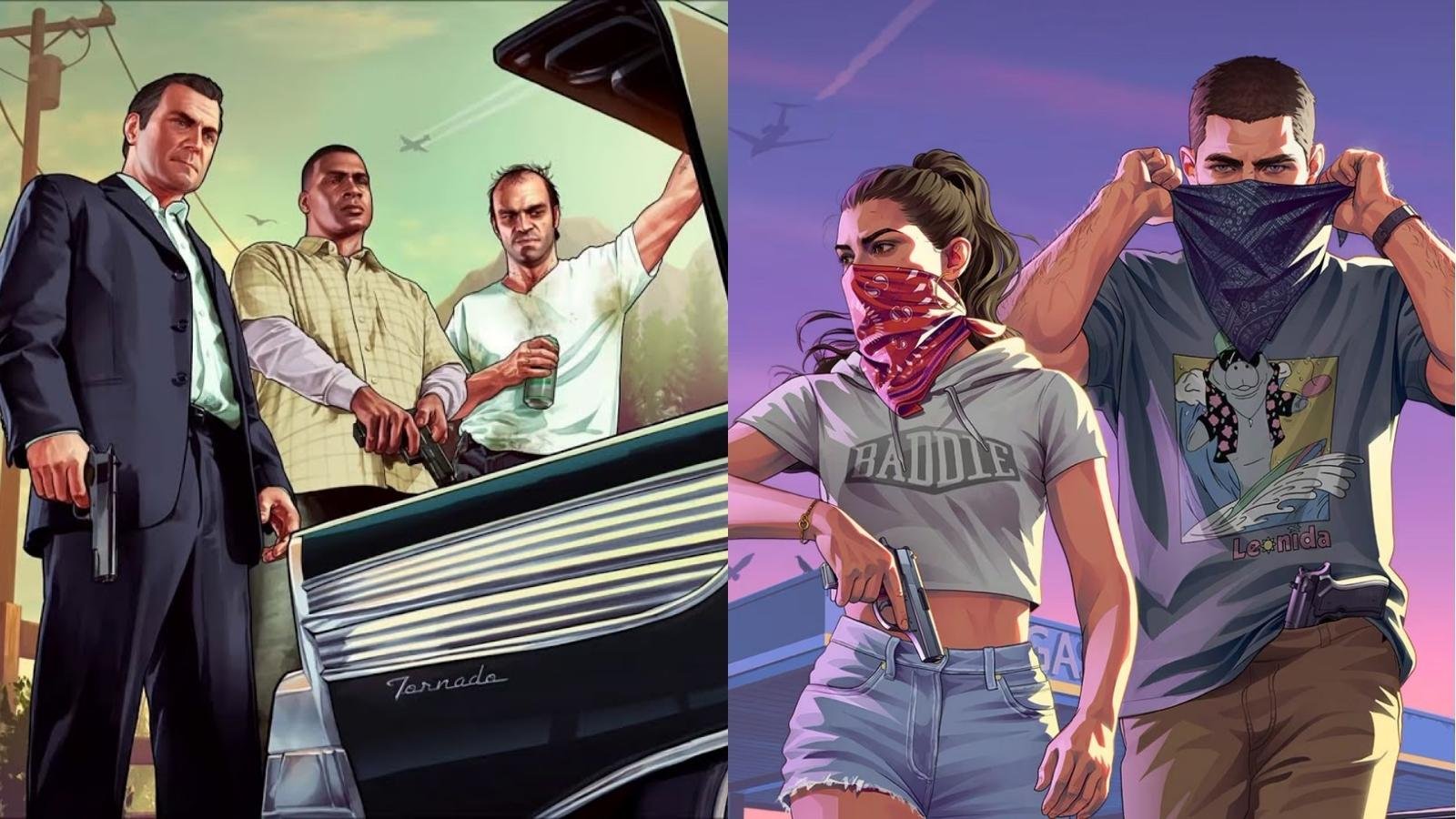
As the gaming and electronic music industries fully pivot toward Grand Theft Auto VI, the legacy of GTA V’s soundtrack becomes even more critical. With GTA VI returning to the neon-drenched, synth-heavy state of Leonida (Rockstar’s fictionalized Florida/Vice City), the expectations for the electronic score are at an all-time high.

Recent updates and the Official Extended Look Teaser highlight Rockstar’s commitment to creating immersive audio environments that enhance gameplay immersion. The audio design is heavily rumored to feature dynamic music systems that react to gameplay situations. Instead of static radio playback, the music may shift instantly depending on player activity, high-intensity action sequences, or in-game events. Powered by the advanced RAGE Audio engine and the PS5’s Tempest 3D AudioTech, the expectation is that every speaker, surface, and room in Vice City will be spatially positioned to sound completely different.
The original GTA: Vice City (2002) is arguably responsible for planting the seeds of the modern synthwave and retrowave movements. Now, Rockstar has the opportunity to bring the genre full circle. In Grand Theft Auto VI, music is expected to act as a dynamic sound ecosystem with evolving radio stations, shifting playlists and a mix of global hits and underground tracks tied to the game world.
Because at the end of the day, video game audio is fundamentally about memory. If GTA V proved that dynamic analog synthesis (via Tangerine Dream) could anchor a modern cinematic narrative, GTA VI is perfectly positioned to elevate modern synthwave, outrun, and chillsynth producers to the largest entertainment stage in human history. Even with rumors of a delayed release, one thing is certain: Rockstar’s audio landscape is in exceptionally safe hands.
Frequently Asked Questions (FAQ)
Who composed the original score for GTA V?
The game’s custom dynamic score was composed collectively by German electronic icons Tangerine Dream, cinematic composer Woody Jackson, and hip-hop producers The Alchemist and Oh No, with engineering and mixing curation handled by DJ Shadow.
What is the name of the title track used in GTA V?
The official title track and main theme for Grand Theft Auto V is “Welcome to Los Santos.” It was composed and produced by underground hip-hop artist “Oh No” and serves as the iconic loading screen and opening credits music for the game.
What is the most famous electronic music radio station in GTA V?
Radio Mirror Park, hosted by Twin Shadow, remains the most culturally influential indie-electronic station in the game. It featured genre-defining tracks from electronic mainstays like Neon Indian, Toro y Moi, and Twin Shadow himself.
How rare is the official Music of GTA V vinyl box set?
The physical box set collection was strictly limited to a global production run of under 5,000 total units across both the vinyl and CD editions, making it an incredibly rare and highly sought-after artifact among video game score collectors.
How was this historical 2013 breakdown recovered?
This text is part of the 2026 Future City Records technical restoration project. The original editorial outline committed to the database on September 25, 2013, has been systematically cross-referenced, checked for link health, and fully expanded to match modern archival standards.
What radio stations and music are confirmed for GTA 6?
While Rockstar hasn’t officially unveiled the full list, several songs have been confirmed through trailers, including Tom Petty’s “Love Is a Long Road,” The Pointer Sisters’ “Hot Together,” and Wang Chung’s “Everybody Have Fun Tonight”. Additionally, the classic rock station V-Rock is heavily rumored to return based on promotional materials.
Will GTA 6 feature a dynamic electronic score like GTA V?
Yes, GTA 6 is expected to build upon the groundbreaking dynamic ambient score of GTA V. The audio engine will likely make the score react seamlessly to player actions and integrate with the game’s world, a technique expected to be heavily refined in the new entry.
2 thoughts on “From Los Santos to Leonida: How GTA V’s Electronic Score Paved the Way for GTA 6”
Comments are closed.