
Editorial Notice: This page represents the official technical and historical restoration of the original article published on Future City Records on January 19, 2013. As part of our 2026 cultural preservation initiative under new leadership by Editor-in-Chief Sahil Chopra, this asset has been recovered from our legacy database. To honor the massive cultural footprint of this artist, we have expanded our original 2013 broadcast into a complete retrospective on his legacy. All original texts are explicitly retained below.
The Original 2013 Flashback
Originally posted by Fcrrecords on Saturday, January 19, 2013.
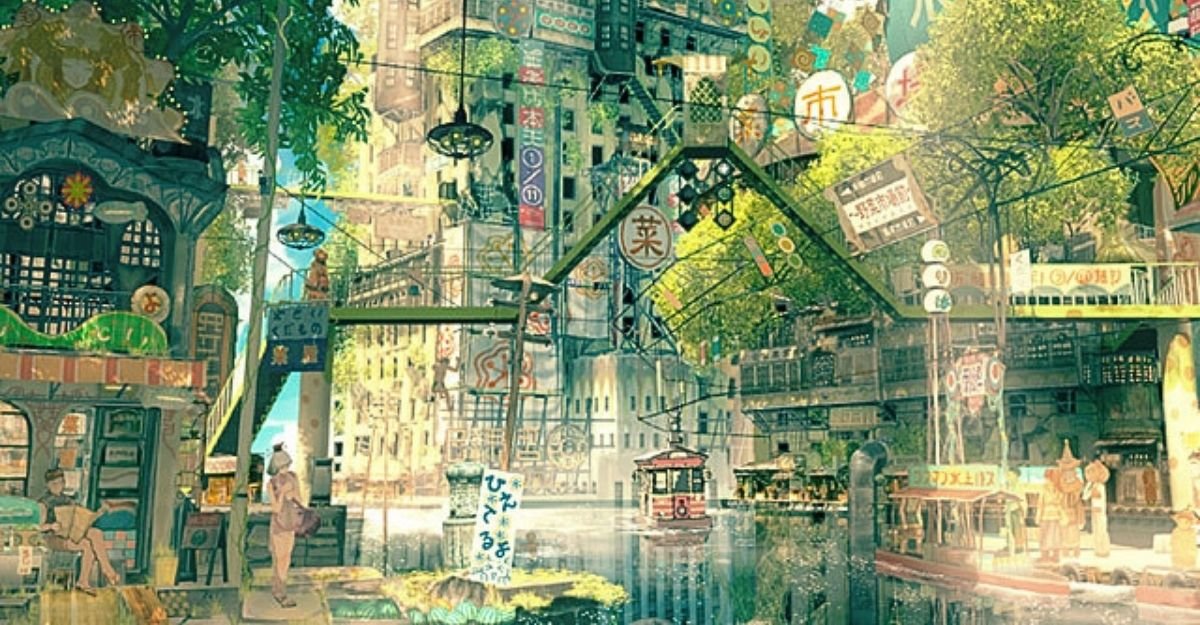
Awhile back I stumbled on some fantastically intricate artwork by a Japanese artist called Imperial Boy. His artwork is extremely detailed and has such an amazingly warm feel yet expresses such distance and depth.
Also It was only recently that I discovered he has worked on the wonderful anime Tekkonkinkreet. There are plenty of blogs and websites with his work… however his main site is in Japanese so if you have any more information about Imperial Boy, we would love to know!
(Editor’s Note: The original 2013 community inquiry has been answered. Below is our definitive, upscaled 2026 master thesis on the artist).
The Enigma of Teikoku Shonen: Debunking the Myth
When Future City Records first broadcast his artwork to the retro-futurist community in 2013, the illustrator known as Imperial Boy (帝国少年 / Teikoku Shōnen) was a total mystery to Western audiences. Over the last decade, internet rumors erroneously attached real-world names to the profile.
To set the editorial record straight: Imperial Boy remains entirely anonymous. Operating purely under his legendary pen name, he built his initial cult following via personal Japanese blogs, independent art circles, and platforms like Pixiv during the late 2000s.
While mainstream western sci-fi leaned into cold, neon-drenched, dystopian cityscapes, Imperial Boy single-handedly pioneered an entirely alternative movement: Cozy Cyberpunk. He proved that futuristic urban density didn’t have to feel sterile, bleak, or dead.
Architectural Anatomy: The Three Pillars of His Style
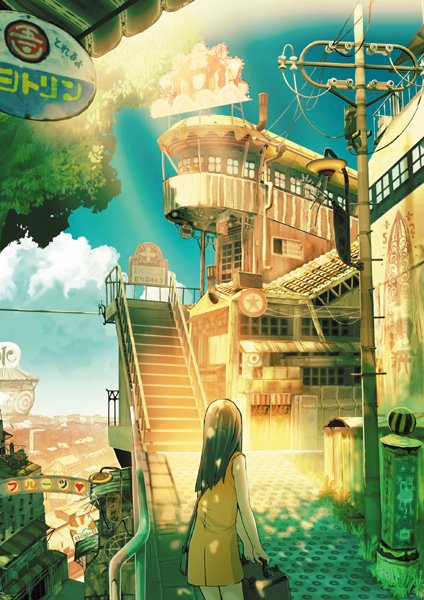
Imperial Boy art is instantly recognizable due to a profound mechanical and spatial philosophy that separates him from standard concept artists. His worlds are defined by three distinct core elements:
- Human-Scale Hyper-Density: His cities are vertical labyrinths. Power lines cross over tight alleyways, makeshift awnings hang over shopfronts, and visible piping crawls along apartment complexes. However, unlike the alienating mega-structures of Blade Runner, Imperial Boy’s architecture is built on a human scale. Every balcony has clothes hanging out to dry; every storefront looks functional.
- The Golden Hour Color Palette: Instead of raining blues, neon pinks, and harsh fluorescent lights, Imperial Boy wraps his urban sprawling in warm ambers, sunset oranges, sepia tones, and natural greens. This choice shifts the emotional response of the viewer from anxiety to profound comfort.
- Microscopic Micro-Narratives: You can zoom into any square inch of his canvas and uncover a standalone story. A stray cat sleeping on a rusted air conditioning compressor, a small potted plant resting on a high window sill, or a vendor prepping street food underneath a massive concrete highway bridge.
Shifting Anime History: The Tekkonkinkreet Masterpiece
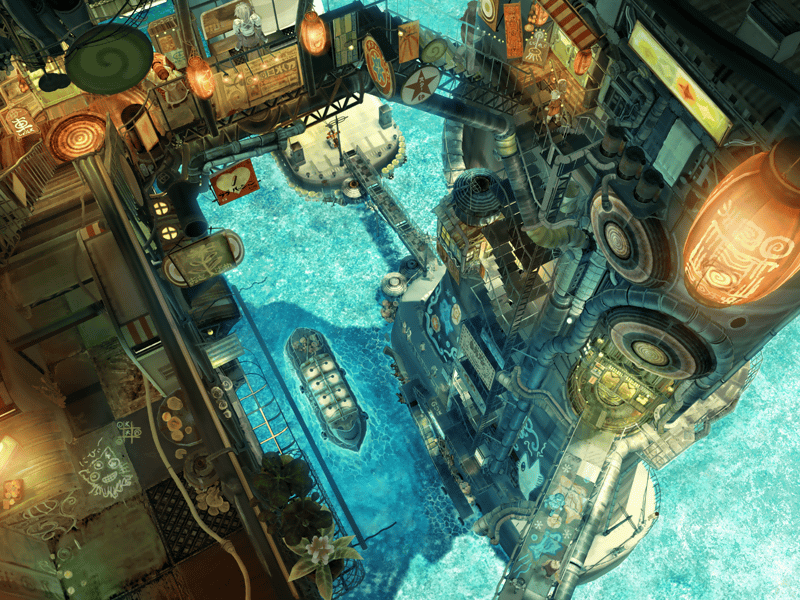
As our original 2013 archive noted, Imperial Boy’s definitive break into mainstream cinema came through his work as a background and industrial designer for Studio 4°C’s groundbreaking 2006 anime film, Tekkonkinkreet (directed by Michael Arias).
The film’s setting, Treasure Town, is a chaotic, vibrant, sprawling coastal metropolis that acts as the physical manifestation of Imperial Boy’s creative soul. He blended traditional Showa-era Japanese storefronts with impossible, retro-futuristic urban decay.
The backgrounds in Tekkonkinkreet were intentionally hand-drawn and painted with slight imperfections, rejecting the clean, computerized CGI lines of the era. This choice gave the movie an organic, living pulse that concrete cities rarely possess in animation.
Predictor: The Godfather of Solarpunk and Lo-Fi Beats
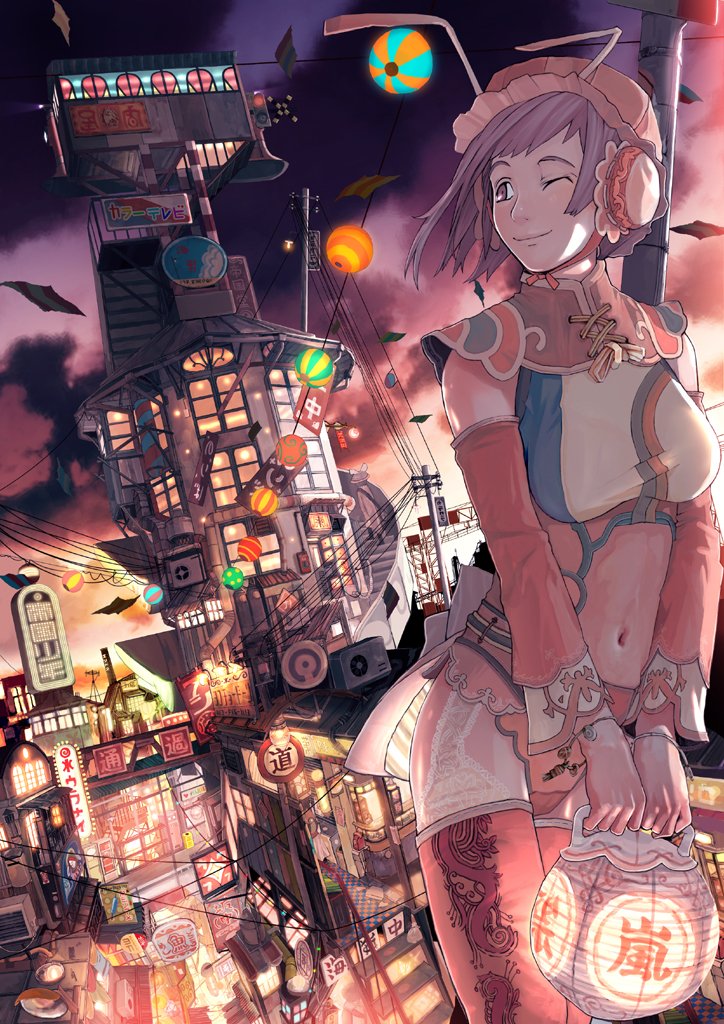
Looking at the digital design landscape, Imperial Boy’s historical footprint has matured into something even more influential. He is structurally responsible for two massive modern digital subcultures:
- The Lo-Fi Aesthetic: The entire visual identity of the “Lo-Fi Beats to Relax/Study To” movement—featuring cozy, cluttered rooms framed against immense, peaceful city backdrops—traces its stylistic DNA directly back to Imperial Boy’s late-2000s portfolio.
- The Solarpunk Movement: As creators actively seek a vision of the future that balances high density with sustainability and community, Imperial Boy’s older works are heavily referenced. His innate ability to weave lush greenery, open-air markets, and human warmth into complex infrastructure serves as the ultimate blueprint for modern solarpunk illustrators.
Imperial Boy didn’t just draft buildings; he engineered living, breathing environments that continue to inspire a generation trying to make the digital future feel a little more like home.
Frequently Asked Questions (FAQ)
What is the real name of the artist Imperial Boy?
Imperial Boy operates completely anonymously and has never publicly revealed his real name. Early internet rumors and automated translations frequently mistranslated his Japanese pen name, Teikoku Shōnen (帝国少年), leading to incorrect real-name attributions across old web forums.
What anime films did Imperial Boy work on?
His most famous anime industry contribution is working as a background and industrial designer for the critically acclaimed 2006 film Tekkonkinkreet, produced by Studio 4°C. His signature hyper-dense, detailed architectural style was the primary blueprint used to create the film’s iconic setting, “Treasure Town.”
Where can I find the official portfolio of Imperial Boy?
Because he values privacy, he does not maintain a mainstream Western social media presence. His official works were historically published on his personal website (which is entirely in Japanese) and via his legacy Pixiv profile under the name 帝国少年. Curated archives of his work are widely shared by fans on art platforms like Pinterest and ArtStation.
What digital art style is Imperial Boy known for?
Imperial Boy is widely recognized as a pioneer of “Cozy Cyberpunk” and early Solarpunk art. While traditional cyberpunk relies on cold, corporate, neon-drenched dystopias, his art subverts this by depicting hyper-dense, highly stacked urban infrastructure wrapped in warm, nostalgic, golden-hour color palettes.
How did Imperial Boy influence the modern Lo-Fi aesthetic?
The visual trope of a cluttered, cozy bedroom filled with plants and cables overlooking a sprawling anime-style cityscape—seen across millions of “Lo-Fi hip hop” YouTube streaming backgrounds—stems directly from the design choices popularized by Imperial Boy on Pixiv in the late 2000s.
Does Imperial Boy still publish new artwork?
Imperial Boy has maintained an exceptionally low profile in recent years, rarely publishing new independent work online. His legacy portfolio, however, remains one of the most studied and referenced architectural blueprints within the modern concept art, game design, and solarpunk illustration communities.