
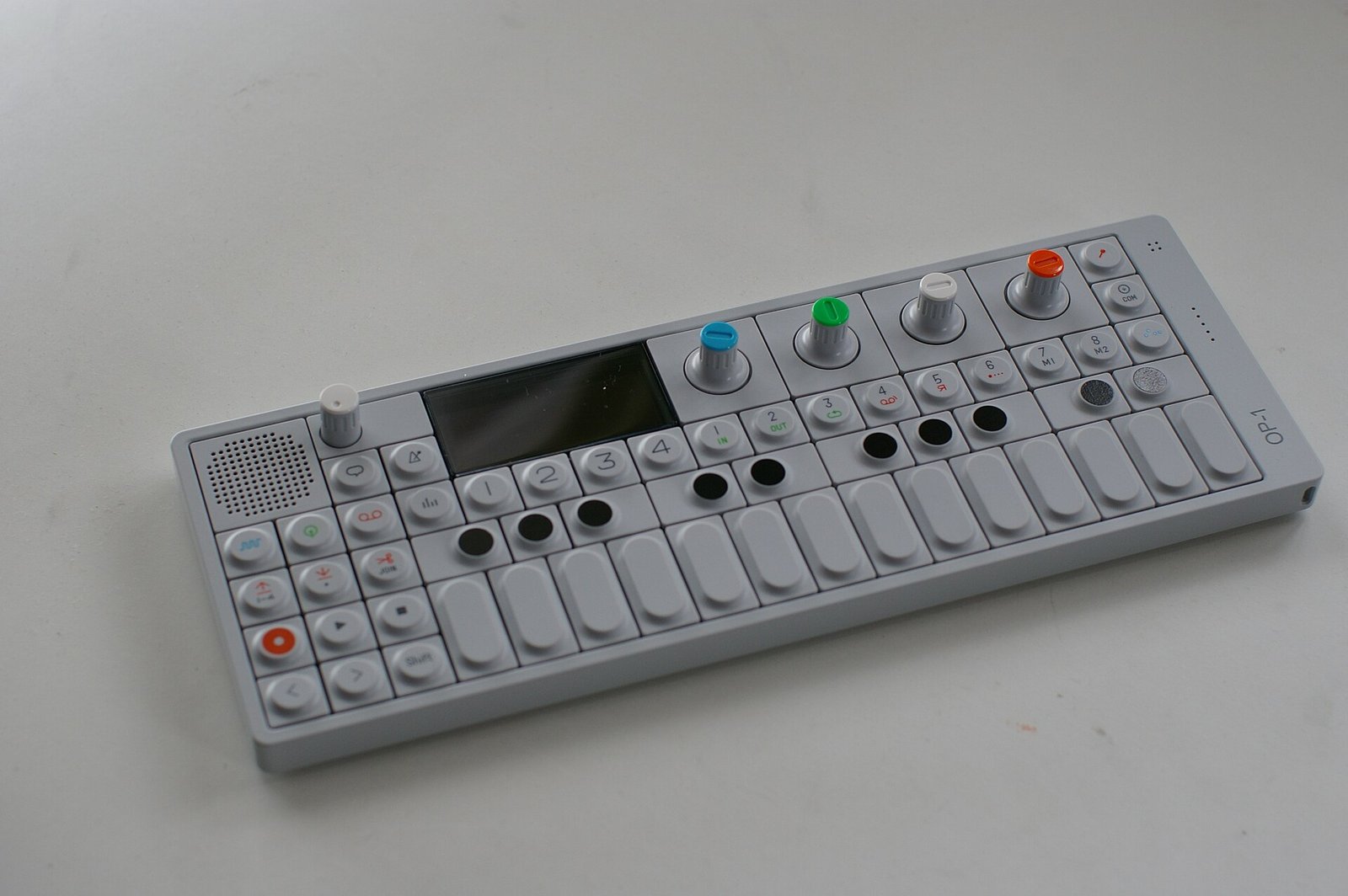
Teenage Engineering, the Stockholm company behind the OP-1, plans to stop making synthesizers, founder and CEO Jesper Kouthoofd told Highsnobiety in an interview published on 7 October 2026.
He said he told his staff during a reorganisation last autumn, and that the OP-1, the portable synth that put the brand on the map in 2011, is no exception. “Everyone was like, ‘What are you talking about?’ But I’ve come to the conclusion that, for us, the products aren’t the business,” Kouthoofd said.
The OP-1 went from $799 to $1,999
Kouthoofd founded the company in 2005 with Jens Rudberg and David Eriksson, his partners at the games firm Netbabyworld. Kouthoofd was also one of the founders of the fashion house Acne Studios. The OP-1 was first shown at the NAMM show in 2010 and went on sale for $799 after the January 2011 show, Synthtopia reported at the time.
It packed a synth, two samplers and a tape-style recorder into a flat, battery-powered box with cartoon graphics. A cow with four stomachs animates the delay effects, and launching the sequencer brings up the phrase “Marx was right.”
When the original model was relaunched in 2019 its price rose to $1,399, and the OP-1 field of 2022 launched at $1,999, 150% more than the 2011 price, according to MusicRadar.
Kouthoofd calls the OP-1 a protest against making music on laptops. Its users include Aurora, the producer Mike Dean and Jean-Michel Jarre, whose Oxygène turns 50 this year.
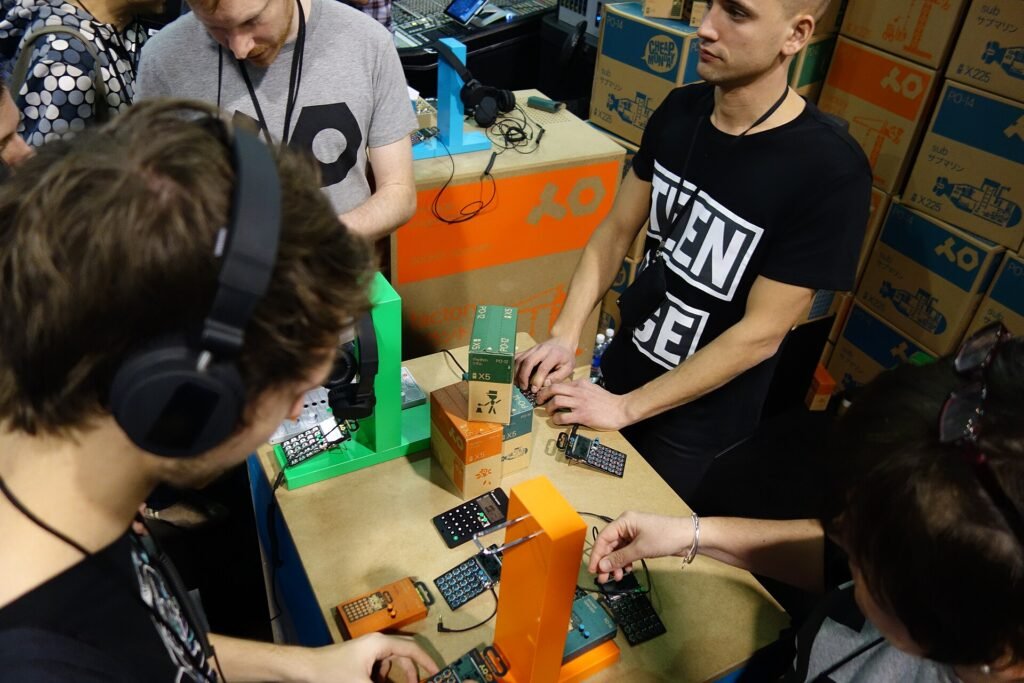
The much cheaper Pocket Operators, bare circuit boards styled after pocket calculators, followed at the NAMM show in Anaheim, California, in January 2015.
“It’s therapy. It’s entertainment”
The line that spread fastest came when Kouthoofd described who actually buys synths: “Ninety-nine percent of people who buy synths don’t use them as a productive tool for making music.”
“It’s therapy. It’s entertainment,” he went on. “It’s a hobby.”
That, he said, is what the OP-1 is. The first version “didn’t even have an undo button.”
Kouthoofd is 56. Teenage Engineering has about 100 employees and annual revenue of around $46 million, according to Highsnobiety, and its office is in Hammarby Sjöstad, a former industrial waterfront in Stockholm.
Its range already goes well past instruments: a portable vinyl cutter, a tape dispenser, a plastic PC case it gives away and a $2,000 “choir” of eight wooden dolls that sing. It also designs for outside clients such as Ikea, Nothing and Playdate, The Verge noted.
“We shouldn’t make profits out of the products,” Kouthoofd said. “The real value lies in the company as a whole.” Behind a locked door at the office, he showed the reporter a project he said “won’t be released for five to 10 years.”
No end date and no comment yet
The interview gives no end date for any current product and says nothing about firmware updates or repairs. Teenage Engineering did not immediately answer The Verge, and Create Digital Music said on 9 October that its questions had gone unanswered too.
That matters to owners. Almost everything the company sells under its own name is music or audio gear, from the OP-1 field and OP-XY to the EP-133 and the TP-7 recorder.
On Reddit, one user quoted by MusicTech asked the company to open-source its firmware so owners could keep the devices going “long after the company moves on to other projects.” Another user called the plan a “good idea” and said the products were already “done” in design terms.
Other hardware stories, from the Roland TR-808 that flopped at $1,195 to Korg’s Phase8, sit in our tech section.
Fifteen years after launch, the original OP-1 is still one of the most sought-after instruments on Reverb, the used-gear marketplace, according to Highsnobiety.
Lead photo: Shuichi KODAMA / Wikimedia Commons, CC BY 2.0