
Psychologists call it the reminiscence bump: music from our teens and early twenties carries more memories, and shapes more lifelong taste, than music from any other stage of life. A 2013 Cornell study found a second bump, for songs that were hits when our parents were young.
In that study, college students showed a sharp peak in memories and liking for music from the early 1980s, a decade they never lived through. It is the same decade synthwave is built on, from its gated drums to its neon cover art.
What the Cornell study measured
Carol Lynne Krumhansl, a psychology professor at Cornell University, and Justin Zupnick, a recent Cornell graduate, played 62 college-age participants two top Billboard hits from every year between 1955 and 2009.
For each song the listeners rated whether they knew it, whether it carried a personal memory, how good it was and how it made them feel. They also said where they remembered hearing it: alone, with friends or with their parents. Each song was also rated on whether it made them happy, sad, energized or nostalgic.
Memories and liking rose steadily for songs from the participants’ own lifetimes, as expected. The surprise was a separate peak for music from the early 1980s, when their parents were about 20 to 25 years old.
Krumhansl said music “transmitted from generation to generation” shapes what we remember and what we like, “a phenomenon we call cascading ‘reminiscence bumps,'” according to the Cornell Chronicle, which reported the study when it was published in September 2013.
The team also found a smaller bump for 1960s music, more than two decades before the students were born. They suggested it may have been passed down from grandparents, or that the music of that decade is simply of higher quality, an explanation Cornell noted baby boomers might prefer.
Why the 1980s can feel like home to younger fans
The basic effect is well established. The paper’s own abstract notes that autobiographical memories are “disproportionately recalled for events in late adolescence and early adulthood”. Most studies place that window between about 10 and 30.
Spotify data points the same way. In a 2018 New York Times analysis, Seth Stephens-Davidowitz found men’s adult taste formed most between ages 13 and 16, and women’s between 11 and 14.
His example was Radiohead’s “Creep”. In 2018 it was the 164th most popular song among 38-year-old men on Spotify, but outside the top 300 for men ten years older or younger. Its biggest fans were about 14 when it came out in 1993.
He also found that for both men and women, the early twenties were half as influential in shaping adult taste as the early teens.
Krumhansl put the parental bump down to exposure at home, saying the findings “likely reflect the prevalence of music in the home environment”.
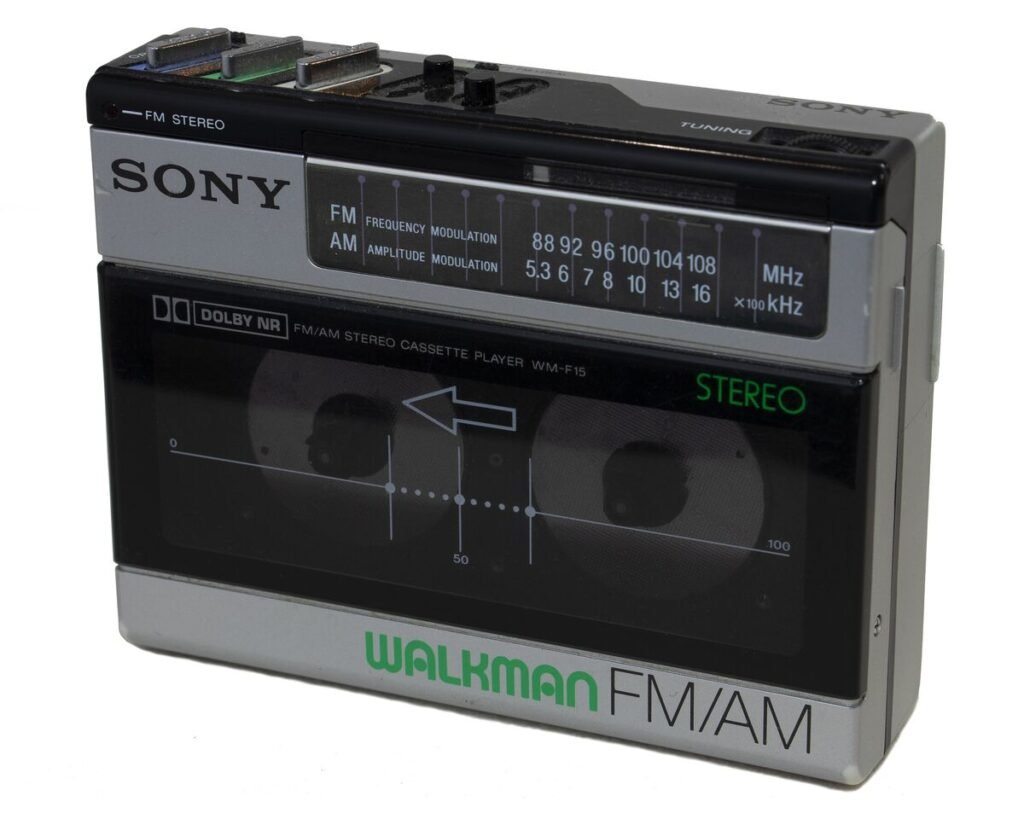
The study did not test synthwave. One reading of it fits the genre, though: a listener raised on a parent’s 1980s records may hear a gated snare or a bright DX7 electric piano as familiar the very first time.
Film and television keep feeding that loop. Kavinsky’s 2010 single “Nightcall” opened the 2011 film Drive, and the first season of Stranger Things in 2016 came with a synth score by Kyle Dixon and Michael Stein of the band Survive.
Our essential synthwave albums archive and the story of Miami Nights 1984’s “Sunset Cruise” show producers rebuilding that 1980s palette, and our guide to synthwave’s cars does the same for its look.
More of that culture, from cars to cover art, sits in our Retro Culture & Visuals section.
The paper, “Cascading reminiscence bumps in popular music”, appeared in the October 2013 issue of Psychological Science, volume 24, pages 2057 to 2068.
Lead photo: Jonathan Borba / Pexels, Pexels licence