
Religious music was the most common thing people with musical hallucinations heard, in a study of 80 patients in the Netherlands published in the Journal of Neurology.
The list also included advertising jingles, the Windows start-up sound and, in one participant’s words, “the sound of zombies howling melodically in a graveyard.”
Music with no source
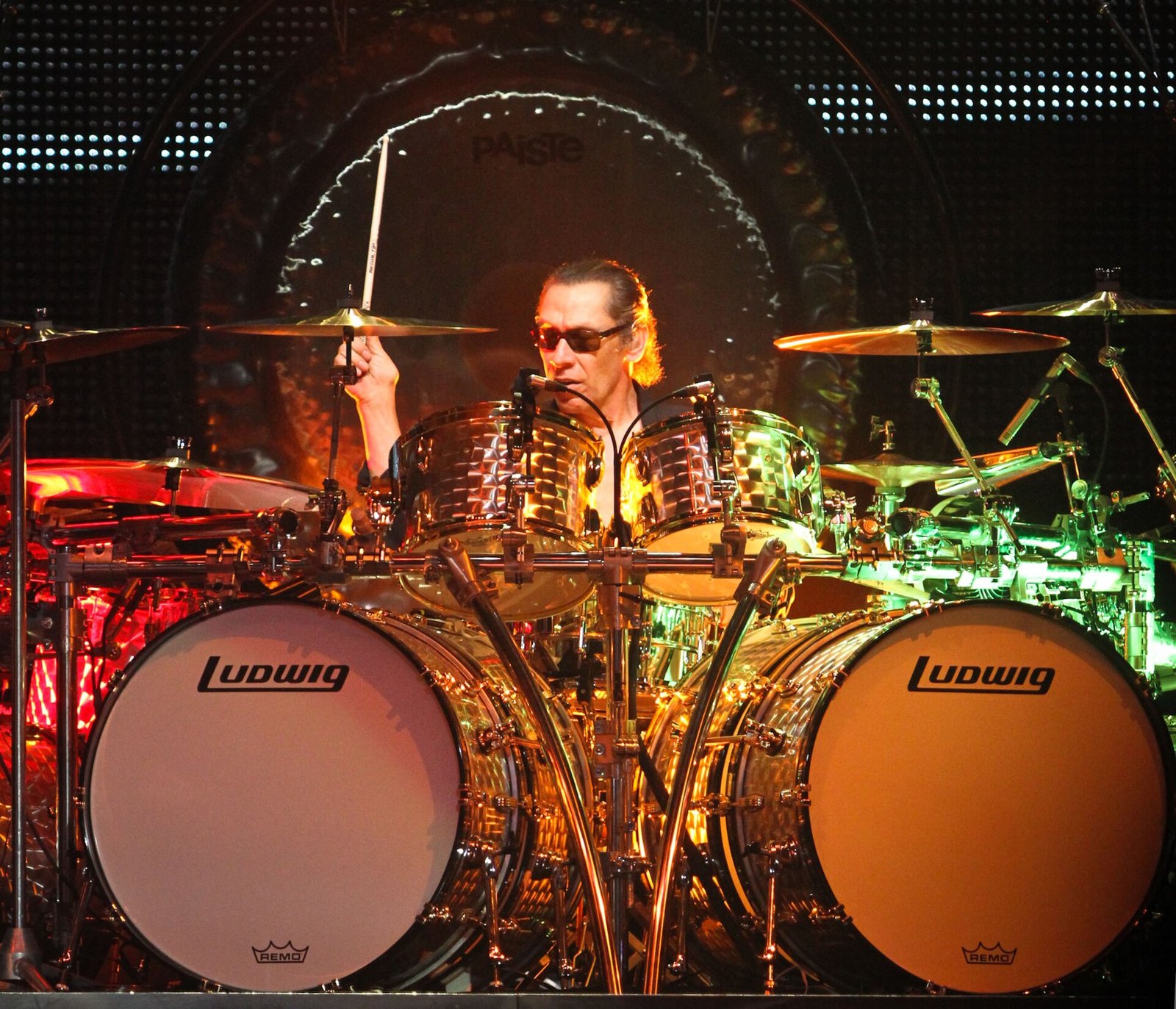
The paper opens with a rock drummer. In Brothers, his 2024 memoir, Alex Van Halen described hearing a song he could not switch off.
“I was hearing the same song over and over again in my head,” he wrote. It was Led Zeppelin, though he could not remember which song, “and it was driving me crazy. Day in, day out, it just wouldn’t stop.”
His episode came during benzodiazepine withdrawal and stopped within a few days, the authors note. Among their own patients who could recall when it began, the music had started eight years before they joined the study, on average.
A musical hallucination is music the brain produces with no outside source, and people can struggle to tell it from the real thing. That separates it from an earworm, the tune stuck in your head that nobody mistakes for a radio.
The authors put the incidence among elderly people at about one in 10,000, and cite a figure of 5.2% among people with hearing problems.

Hymns, nursery songs and pop
The data come from the MuHa Study, which ran from 2010 to 2023 at Parnassia Psychiatric Hospital and the Haga Hospital in The Hague. Daphne Kerklaan, Jan Dirk Blom, Ouarda Bouachmir and Jan Coebergh analysed 80 of the 81 people enrolled. Their mean age was 65, with a range from 15 to 95, and 58.8% were women.
Religious music made up 18.1% of the genres reported, including Christmas carols, choir music and gospel. Children’s songs and popular songs came next at 16.8% each. Most of the music was familiar: of the people who heard songs they knew, 55.7% heard only music from early in life, against 11.5% who heard only recent music.
Music from those years is also what people remember best, the effect psychologists call the reminiscence bump. Oliver Sacks, who wrote about musical hallucinations in his 2007 book Musicophilia, explains what hallucinations reveal about the brain in this TED talk.
Hearing loss was only half the story
In earlier research the typical patient was an older woman with hearing loss, but this group was more mixed. Half had a psychiatric disorder, half had hearing loss and 28% had structural changes in the brain, often in combination.
In all, 56.3% heard the music inside their head and 27.5% heard it as if it came from outside. Tinnitus was common, reported by 40%.
Women were almost five times more likely than men to hear the music inside their head, the authors found.
Some heard more than music: 35 people, or 43.8%, also had hallucinations or distortions involving other senses, as many as six.
For 65% the music was a burden. Of those, 78.8% heard it on 21 to 31 days a month, and 67.5% had no conscious control over it.
Distraction or playing real music gave only short relief to about 20%.
The study was published open access in July and was picked up this week by Popular Mechanics. For more music science, read how bass you can’t hear made a crowd dance, how favourite songs eased needle pain, and why the songs of your teens stick, in our piece on the reminiscence bump.
The paper does not say which Windows chime the patient heard. The best-known, the six-second Windows 95 start-up sound, was written by Brian Eno, who told BBC Radio 4: “I wrote it on a Mac.” He has said the brief asked for a piece three and a quarter seconds long, and that he made 84 of them.
Lead photo: Craig ONeal / Wikimedia Commons, CC BY 2.0