
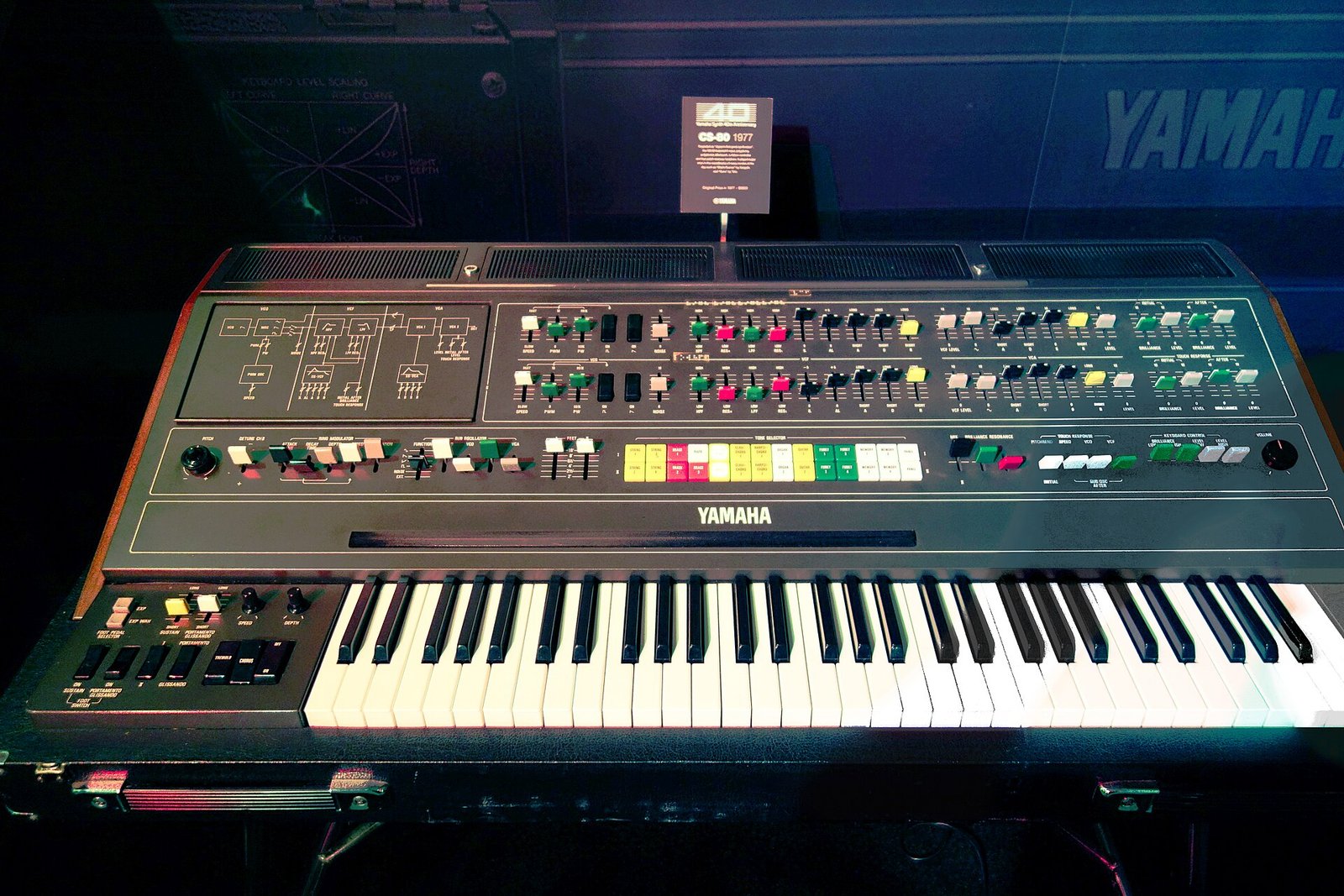
A Yamaha CS-80 billed as Vangelis’s very first CS-80 changed hands on Reverb in late July for £401,465.62, more than $534,000, the highest price yet paid for a synthesizer.
The seller, an Athens dealer trading as Synthesizerman, offered no paperwork linking the instrument to the composer, and the listing came down after the sale. MusicTech called it “the most expensive synth sale in history.”
“This is the real deal. Early prototype no serial number,” the listing read.
“It can demolish a whole block of flats. This is the ‘Spiral’ CS-80, historic. Priced accordingly.”
That asking price already included a 10% discount on the original figure, MusicRadar reported.
What the Reverb listing claimed
According to the seller, the synth was “fully functional with its original stand and lid” and in excellent condition, apart from minor cosmetic wear and a small cigarette burn on its top A note.
It had no serial number, which the seller put down to it being an early prototype. MusicRadar noted there was “no evidence provided that this synth actually belonged to Vangelis, other than the seller’s word,” and no auction house had authenticated it.
The claimed history is Spiral, his 1977 album and the first record Vangelis made with a CS-80, including the track “To the Unknown Man” below.
The previous high prices for electronic instruments came at auction in 2025. Florian Schneider’s Kling Klang Sennheiser VSM-201 vocoder from Kraftwerk sold for $256,000, and his EMS Synthi A went for $115,200. The CS-80 fetched more than twice the vocoder’s price.
A $6,900 synth that weighed over 200 lb
Yamaha launched the CS-80, a machine weighing more than 200 lb, in 1977 at $6,900 in the US and £4,950 in the UK, according to the instrument’s production record, and stopped making it in 1980.
Each of its eight voices had two independent layers with their own front-panel controls. The keyboard was velocity-sensitive with aftertouch that worked on each note separately, and a ribbon controller allowed pitch bends and glissandos across a chord. It is usually ranked with the Sequential Prophet-5 and Oberheim OB-X as the top polyphonic analog synth of that era.
Vangelis told Electronics & Music Maker in 1984 that the CS-80 was “the most important synthesiser in my career, and, for me, the best analogue synthesiser design there has ever been.” He added: “It needs a lot of practice if you want to be able to play it properly.”
He was less kind about Yamaha’s next big hit, calling the DX7 a “commercial little toy” that was “a step back from the CS-80.”
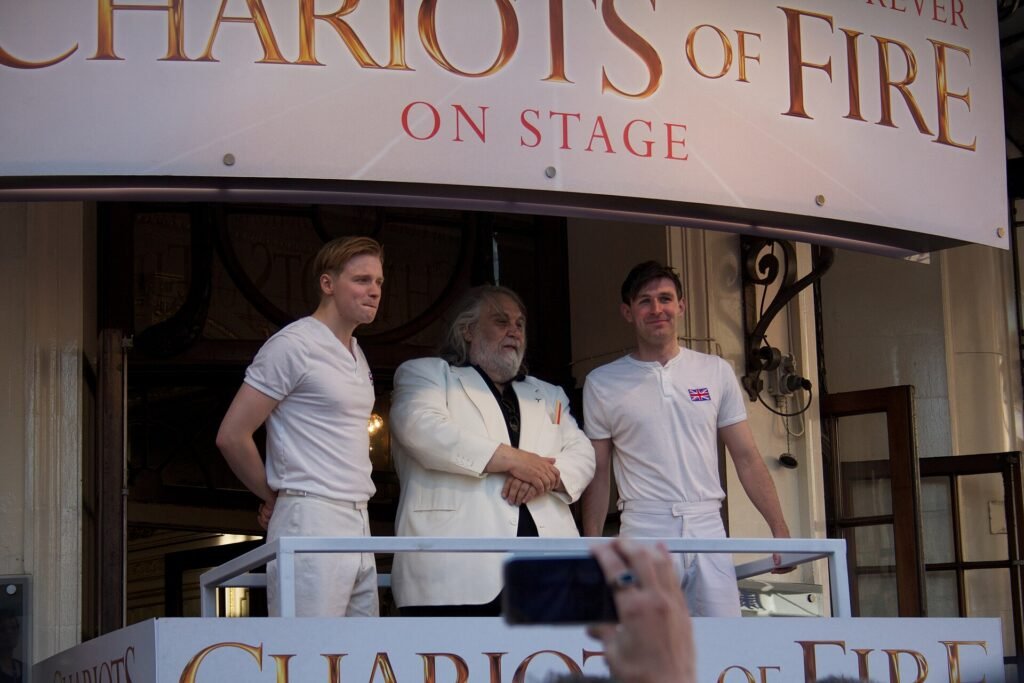
The CS-80 was his main synth through the late 1970s and much of the 1980s, on China, Opera Sauvage and the scores for Chariots of Fire and Blade Runner. He owned more than one, so even a genuine Spiral unit is not necessarily the one heard in the 1982 film.
The Blade Runner soundtrack album itself did not come out until 1994, 12 years after the film. Vangelis died in 2022, aged 79.
What a CS-80 costs without the name
Ordinary CS-80s regularly sell for five figures. When the Vangelis unit sold, MusicTech pointed readers to another vintage CS-80 listed at £40,000, a tenth of the price.
A mint Roland Jupiter-8 listed at $27,996 in December 2024, by comparison. Producers after the sound for less use samples, such as the Fabric CS-80 library we covered, or emulations.
Yamaha’s own Reface CS, a 37-note mini synth released in 2015, is based on the CS-80. Software versions include Arturia’s CS-80 V from 2003, Cherry Audio’s GX-80 from 2022 and Softube’s Model 77 from 2024. Nobody has cloned the whole instrument in hardware, though Black Corporation’s rackmount Deckard’s Dream borrows its architecture.
Lead photo: Pete Brown / Wikimedia Commons, CC BY 2.0