
If you produce cinematic synthwave or darksynth, you already know about the Yamaha CS-80. It is the holy grail of polyphonic synthesizers—the heavy, breathing, analog soul behind Vangelis’ legendary Blade Runner soundtrack.
But there are two massive problems with the CS-80: buying the physical hardware costs upwards of $100,000, and standard software emulations of it are notorious for melting your computer’s CPU.
That is exactly why producers are going crazy over the release of Fabric Vintage Synths Vol. 2 by AIR Music Technology. Instead of painstakingly trying to code a circuit-level emulation, AIR used a brilliant “hack” to deliver the unmistakable CS-80 sound—alongside two other legendary synths—directly into your DAW and standalone MPC.
Here is why this bundle is the ultimate cheat code for your next cyberpunk release.
The Multi-Sample Hack: Beating the CPU Trap
Most vintage synth plugins use “component modeling,” meaning the software tries to calculate the mathematical behavior of every resistor and capacitor in real-time. This sounds great, but it brings your CPU to its knees the second you play a 4-note chord.
AIR took a different route. They used their proprietary Fabric XL Engine to deeply multi-sample the original, pristine hardware. By playing back high-definition audio captures rather than running complex algorithms, you get the authentic, massive width of the analog hardware with almost zero CPU strain.
But these aren’t static loops. The Fabric engine routes those raw multi-samples through a completely modern synthesis architecture. You still get full control over the filter cutoff, resonance, amp envelopes, LFOs, and built-in FX, allowing you to tweak the vintage tones into modern, aggressive darksynth leads.
The Holy Trinity of Polysynths
Fabric Vintage Synths Vol. 2 doesn’t just stop at the CS-80. It brings three distinct heavyweights into your digital environment:
- Fabric Vintage CS (Yamaha CS-80): The star of the show. It captures the rich, detuned brass, dynamic response, and cinematic pads that defined 1980s sci-fi.
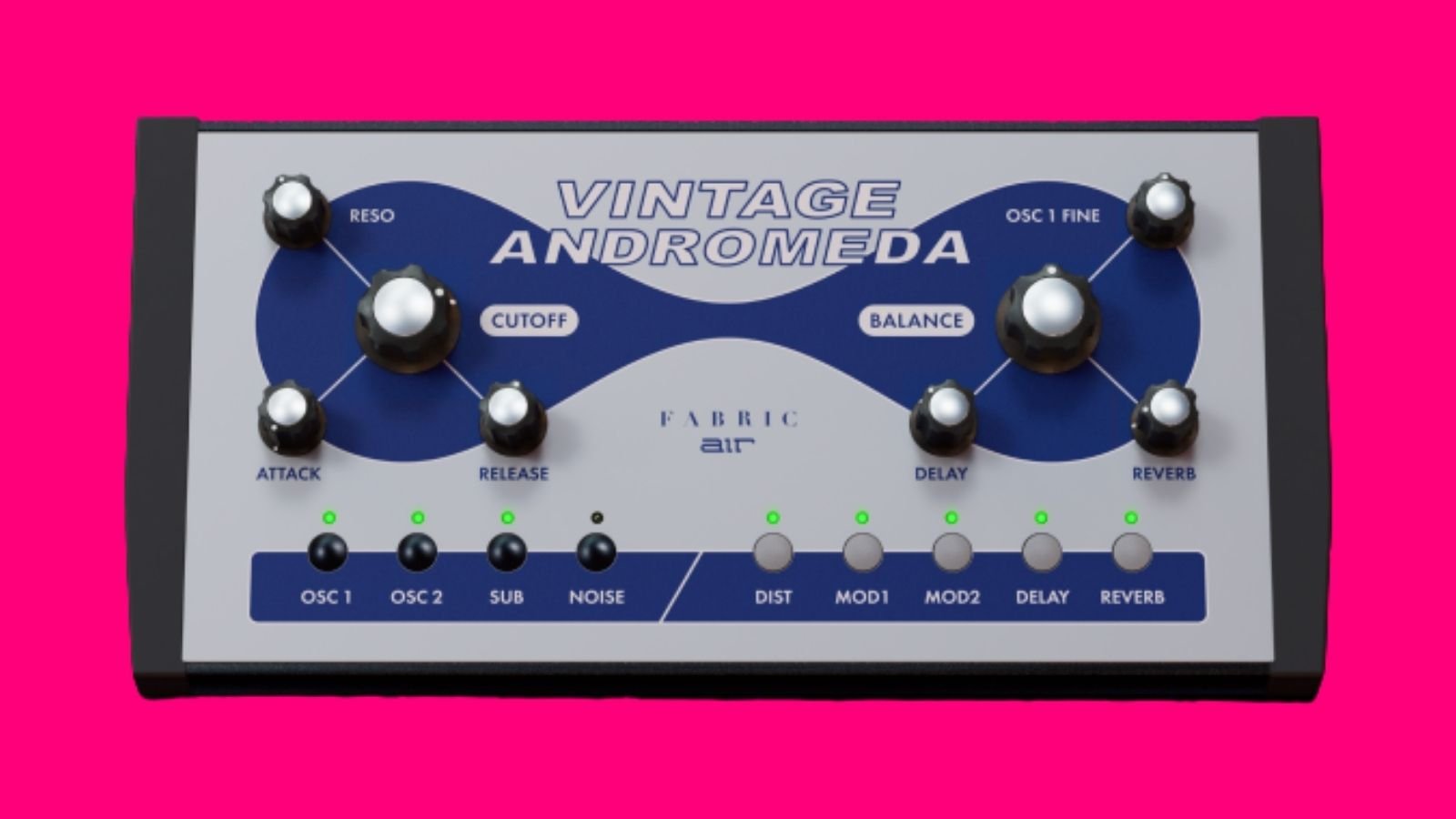
- Fabric Vintage Andromeda (Alesis Andromeda A6): An early 2000s 16-voice multitimbral powerhouse. Known for its complex, expansive, and deeply expressive character, this is your go-to for massive, evolving textures.
- Fabric Vintage Matrix (Oberheim Matrix 12): A playable, modern take on the 1980s classic. It captures the depth and complexity of matrix-style modulation, perfect for lush, nostalgic pop and synthwave hooks.
Pro Tip: Because this bundle integrates flawlessly with standalone Akai MPC hardware, mapping these vintage synths to the pads and rotaries of the Akai MPK Mini IV gives you an incredibly tactile, hands-on sound design experience.
Pricing & Availability
To celebrate the launch, AIR Music Tech is running a massive introductory sale via Plugin Boutique until September 3rd, 2026. You can grab the instruments individually or pick up the entire bundle for less than half the regular price.
| Region | Intro Price (Ends Sept 3) | Regular MSRP |
| United States (USD) | $119.00 | $299.00 |
| Europe (EUR) | €109.00 | €275.00 |
| United Kingdom (GBP) | £95.00 | £235.00 |
| Australia (AUD) | $179.00 | $450.00 |
(Individual instruments are on sale for $59 USD each, down from their regular price of $99 USD).
Whether you are scoring an indie game or adding heavy brass chords to your workout playlist, Fabric Vintage Synths Vol. 2 is an unbeatable addition to your studio arsenal.
Frequently Asked Questions (FAQ)
Are these plugins true analog emulations?
No, they are not circuit-modeled emulations. They are deeply multi-sampled virtual instruments powered by the Fabric XL engine. This allows them to capture the authentic sound of the original hardware while maintaining incredibly low CPU usage.
What operating systems are supported?
The plugins are compatible with macOS (Native Apple Silicon and Intel) and Windows. They are available in VST, VST3, AU, and AAX formats.
Do these work on standalone MPC hardware?
Yes! A major advantage of the Fabric Vintage Synths series is full compatibility with modern standalone Akai MPC hardware, the MPC Desktop software, and all major DAWs.
Which synths are included in Vol. 1 vs Vol. 2?
Volume 1 features sounds from the Sequential Prophet-5, Roland Jupiter-8, and Moog Memorymoog. Volume 2 features the Yamaha CS-80, Alesis Andromeda A6, and Oberheim Matrix 12.