
Editorial Notice: This asset represents the official historical restoration of our original artist spotlight published on Future City Records in late 2014. As part of our 2026 cultural archive initiative led by Editor-in-Chief Sahil Chopra, this resource has been expanded to contextualize the monumental impact that Argentinian art director Gustavo Torres—universally known as Kidmograph—had on the visual identity of the global retro-electronic movement.
Introduction: When the Grid Was Born
In 2014, the synthwave audio movement was booming. Producers like Timecop1983, Mitch Murder, and Miami Nights 1984 were defining a lush, nostalgic sound. However, the scene was still searching for its definitive visual identity. Album covers were often simple homages to VHS tapes or basic 80s movie posters.
Then came the golden era of Tumblr and a prolific digital artist from Argentina named Gustavo Torres, operating under the moniker Kidmograph.
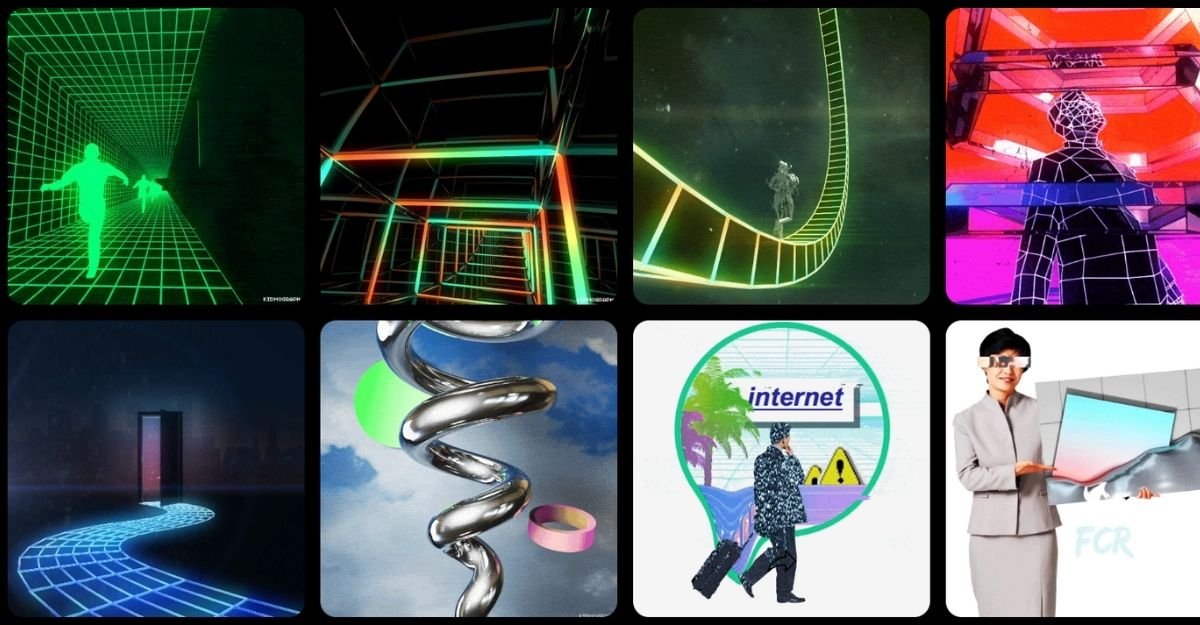
Before the widespread use of algorithmic video rendering, Kidmograph was hand-crafting perfect, endlessly looping GIF art. He didn’t just borrow from the 1980s; he injected retro-futurism with modern motion design. His art was a mesmerizing blend of glowing wireframes, infinite neon grids, chrome sports cars speeding through digital deserts, and glitchy VHS tracking static. Almost overnight, Kidmograph’s visual language became the undisputed face of the synthwave, vaporwave, and outrun genres.
Part I: The Power of the Infinite Loop
The connection between Kidmograph’s art and the Future City Records roster was instantaneous. The structure of early synthwave was heavily reliant on looping, hypnotic 4/4 analog basslines.
Kidmograph matched this sonic repetition visually. A perfectly looped GIF of a neon sun sinking behind a cybernetic cityscape was the exact visual equivalent of a driving Roland Juno-106 arpeggio. When fans shared tracks from the underground synthwave scene on forums and social media, they almost universally paired the audio with a Kidmograph GIF.
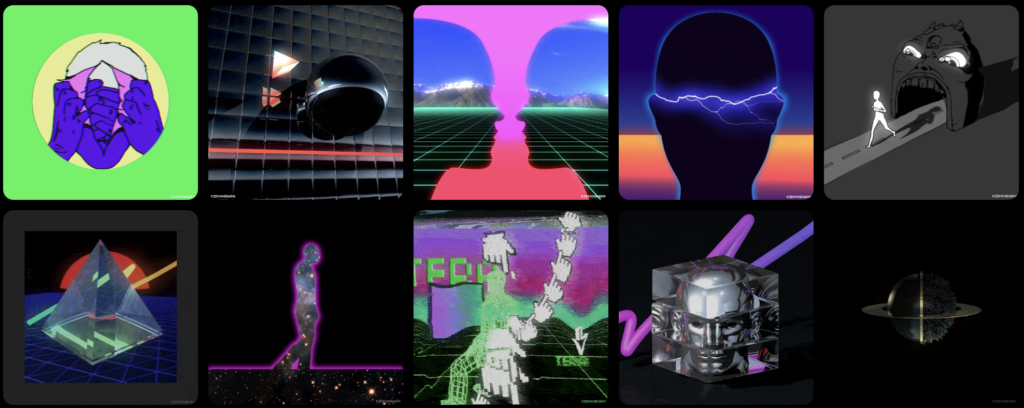
His loops were so perfectly paced and atmospheric that they turned simple audio uploads into immersive, hypnotic music videos.
Part II: Defining the Motifs of “Outrun”
By late 2014, Torres had established the visual tropes that would go on to be endlessly imitated by thousands of digital artists over the next decade. His primary motifs included:
- The Cyber-Grid: Endless, glowing topographical plains stretching into a vanishing point.
- The Chrome Cyber-Car: Vector-traced 1980s sports cars (often resembling the DeLorean or the Lamborghini Countach) speeding through empty, futuristic highways.
- Roman Busts & Vaporwave Glitch: Merging classical antiquity with early-90s Windows 95 aesthetics, CRT tracking errors, and databending.
- The Neon Sun: The iconic, segmented horizon-sun that is now synonymous with the word “Retrowave.”
Part III: From Underground Hero to Mainstream Collabs
While Kidmograph started as the underground hero of the synthwave blogosphere, his talent was far too massive to remain a secret.
Following his dominance in 2014 and 2015, Torres transitioned from crafting Tumblr GIFs to acting as a top-tier Art Director for global powerhouses. He served as the art director for superstar DJ A-Trak, and soon his unmistakable glitch and retro-future aesthetics were being sought out by major brands like Adidas, Apple, and Gucci. He even collaborated with the late, legendary fashion designer Virgil Abloh.
Despite this massive mainstream crossover, Kidmograph never lost his connection to the underground electronic scene, continuing to create visuals for prominent synth-centric artists like Gunship.
Part IV: The 2026 Perspective
Looking back from 2026, it is impossible to imagine the synthwave movement without the visual foundation laid by Gustavo Torres.
He proved that GIF art wasn’t just a medium for internet memes; it was a legitimate, highly expressive art form. The aesthetics he popularized in 2014 became so deeply embedded in pop culture that they influenced everything from major Hollywood movie title sequences to high-end fashion lines. Kidmograph didn’t just illustrate the outrun universe—he built the grid we are all still driving on today.
Frequently Asked Questions (FAQ)
Who is Kidmograph?
Kidmograph is the professional moniker of Gustavo Torres, an internationally renowned Argentinian Art Director and digital artist. He is widely considered one of the founding fathers of the modern synthwave, vaporwave, and retro-futuristic visual aesthetics.
What kind of art does Kidmograph make?
Gustavo Torres specializes in looping GIF art, motion design, and 3D rendering. His work heavily features 1980s nostalgia, cyberpunk imagery, neon grids, chrome vector graphics, and VHS/CRT glitch aesthetics.
Has Kidmograph worked with major brands?
Yes. Beyond his foundational work in the underground synthwave and electronic music scenes, Kidmograph has provided art direction and visual design for massive global brands including Apple, Adidas, and Gucci, as well as artists like A-Trak and Justin Bieber.